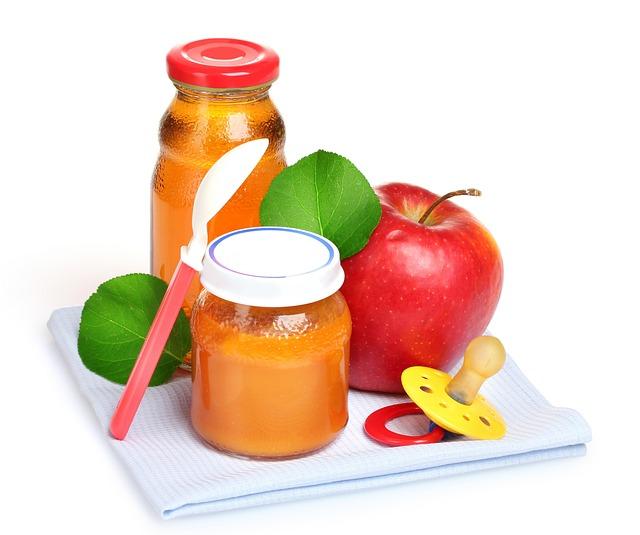
How fast do bacteria grow in baby food left out of the fridge? You open three types of baby food -- chicken, pumpkin, and apple -- and leave them at room temperature for different lengths of time. One set goes right back in the fridge. Another stays out for 30 minutes before being stored. A third stays out for a full 24 hours.
After the waiting period, you swab samples onto blood agar plates and measure the bacteria colonies three days later. The food left out longest grows the most bacteria. Chicken baby food produces larger colonies than pumpkin or apple across all conditions.
Hypothesis
The hypothesis is that baby food will become more contaminated when it is left out for a longer period of time.
Baby food left at room temperature combines food, warmth, and moisture, making it an ideal environment for bacteria to multiply. This project opens chicken, pumpkin, and apple baby food and leaves each one out for different lengths of time: straight to the fridge, 30 minutes out, or a full 24 hours at room temperature. After each waiting period, swab samples go onto blood agar plates. Three days later you measure the colonies. The food left out longest grows the most bacteria, and chicken baby food produces larger colonies than pumpkin or apple across all conditions.
Bacterial contamination happens when harmful germs get into food and make it unsafe. You cannot see these germs, but agar plates reveal them as visible colonies. In this project, chicken baby food produces larger colonies than pumpkin or apple across all conditions.
Bacteria multiply rapidly in food left at room temperature, which is why refrigeration is a critical safety step. The longer food sits out, the more time germs have to grow. In this experiment, baby food left out for 24 hours grew far more bacteria than food refrigerated right away — and chicken baby food produced the largest colonies across all conditions.
Method & Materials
You will label three bottles of each type of baby food (chicken, pumpkin, and apple) with A, B, and C. Bottle A will be placed in the fridge for 24 hours, bottle B will be left out for 30 minutes before being placed in the fridge, and bottle C will be left out for 24 hours. After 24 hours, you will take a sample from each bottle and place it in a petri dish. You will then measure the size of the bacteria colony after 3 days.
You will need 9 petri dishes prepared with blood agar, 3 bottles of chicken baby food, 3 bottles of pumpkin baby food, 3 bottles of apple baby food, a refrigerator, 9 sterile cotton buds, and a permanent marker pen.
Eureka Crate — engineering & invention kits for ages 12+ — monthly projects that build real-world skills. (Affiliate link)
The results showed that the specimen that was left outside for 24 hours had the highest rate of bacteria growth. The chicken specimen had a larger bacteria colony than the pumpkin and apple specimens.
Why do this project?
This science project is interesting because it shows how quickly bacteria can grow on food that has been left out of the fridge. It also shows the difference between different types of food in terms of how quickly they become contaminated.
Also Consider
Variations of this experiment could include using different brands of baby food, or repeating the experiment using milk, porridge, and soup. Another variation could be to dip a used spoon (containing baby saliva) into the bottles of food and observe the results.
Full project details
Additional information and source material for this project are available below.