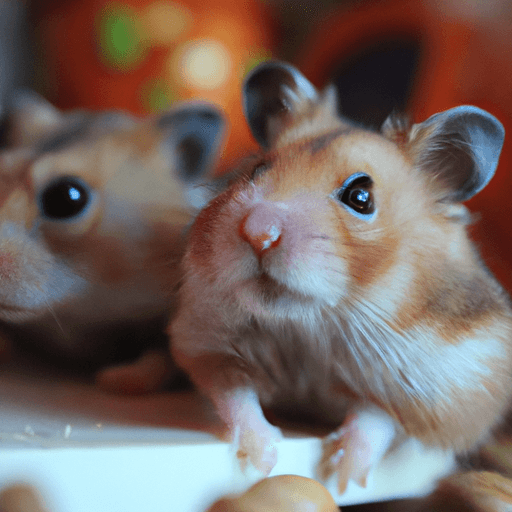
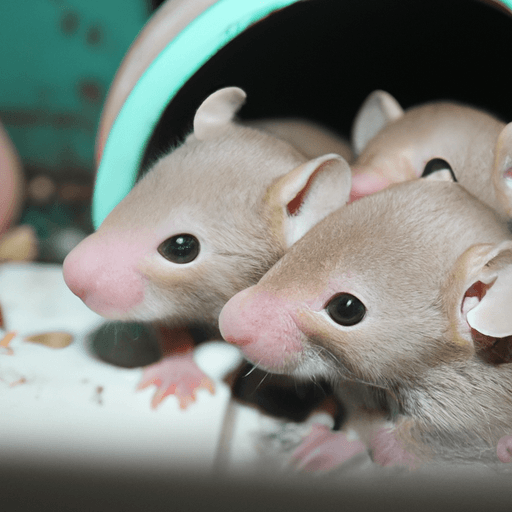
Can hamsters and mice learn to solve a maze faster with practice? You build a cardboard maze and place sunflower seeds at the finish. Then you send three hamsters and three mice through the maze one at a time, repeating the run ten times over ten hours.
You time each run with a stopwatch. Both species get faster after every attempt. This shows they remember the paths. The mice complete the maze faster than the hamsters overall.
Hypothesis
The hypothesis is that both hamsters and mice are able to learn and remember, but mice are able to learn more quickly than hamsters.
With each attempt, hamsters and mice both completed the maze faster — timing each run with a stopwatch made the improvement easy to measure. When three hamsters and three mice each ran a cardboard maze ten times, both species remembered the paths and shaved time off every attempt. The mice finished faster overall than the hamsters, which shows that the rate of learning can vary between species.
One way to measure animal intelligence is to watch whether animals solve the same problem faster with practice. When hamsters and mice run a cardboard maze ten times, both species get faster after every attempt, showing they learn and remember the paths. The mice complete the maze faster than the hamsters overall, revealing differences in problem-solving speed between species.
Animals show memory by completing the same task faster each time they try it. When hamsters and mice run a maze ten times, both species get faster after every attempt because they remember the paths. Mice are able to learn more quickly than hamsters, showing that different species store and recall spatial information at different speeds.
Method & Materials
You will construct a maze using cardboard boxes, glue, and masking tape. You will then place food in the finish zone of the maze and drop the hamsters and mice in the start zone. You will time how long it takes them to find the food and record the results.
You will need 3 hamsters, 3 white mice, a packet of sunflower seeds, a variety of cardboard boxes, scissors, masking tape, glue, a stopwatch, and a meter-long ruler.
Eureka Crate — engineering & invention kits for ages 12+ — monthly projects that build real-world skills. (Affiliate link)
The results of the experiment showed that both the hamsters and mice were able to improve their timings after every attempt, showing that they were learning and remembering the paths inside the maze. The mice were also able to complete the maze faster than the hamsters.
Why do this project?
This science project is interesting because it shows how animals can learn and remember, just like humans. It also shows how different animals can learn at different speeds.
Also Consider
Experiment variations include using a different kind of feed like dried shrimp, increasing the length of time between the attempts, and using young mice/hamsters instead of fully grown creatures.
Full project details
Additional information and source material for this project are available below.