Rear Fog Lights and Distance Estimation
Hard
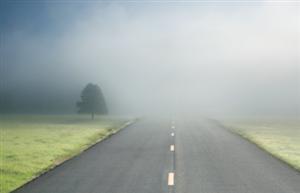
Do rear fog lights help drivers judge distance more accurately in low visibility? A stationary car is parked at the end of a fog-filled lane. Ten drivers each attempt to stop their car exactly 10 meters behind it.
The test is repeated three times: once with no rear fog lights, once with one, and once with two. Fog machines keep visibility consistent across all trials.
Drivers misjudged distance the most with zero or one rear fog light. Two rear fog lights produced the most accurate distance estimates.
Hypothesis
The hypothesis is that the use of two rear fog lights will improve the driver's ability to estimate distance.
Method & Materials
You will need 10 drivers with at least 3 years of driving experience, two cars (one with one fog light, one with two fog lights, and one without any fog lights), two fog machines, and a long measuring tape. The drivers will take turns driving the car with the fog lights and the distance between the cars will be measured.
You will need 10 licensed drivers with at least 3 years of driving experience, 1 car fitted with 1 rear fog light, 1 car fitted with 2 rear fog lights, 1 car without any rear fog lights, 1 car to be driven by the participants, 2 fog machines, a long measuring tape (at least 15 meters in length), and an assistant.
Eureka Crate — engineering & invention kits for ages 12+ — monthly projects that build real-world skills. (Affiliate link)
See what’s includedResults
The results of the experiment showed that using 1 rear fog light and no rear fog lights caused the stationary vehicle to appear further away than it actually is. This proves that the hypothesis that the use of two fog lights will improve the estimation of distance by drivers is true.
Why do this project?
This science project is interesting because it tests a common problem that drivers face in foggy conditions. It also provides a practical solution to the problem of estimating distance in foggy conditions.
Also Consider
Variations of this experiment can include adjusting the height of the fog lights, using red or yellow fog lights, or repeating the experiment at night.
Full project details
Additional information and source material for this project are available below.Related videos
These videos explain the science behind this project and demonstrate key concepts used in the experiment.
Share this Science Project:
Related Science Fair Project Ideas
Record 18 hours of highway traffic on video and score each time window for speed, volume, and pollution potential.
Hard
Drive five cars on the same fuel supply at full and reduced tire pressure to measure how much mileage changes.
Hard
Give five cars the same fuel at 90 and 110 km/h to measure how much farther the slower speed goes.
Hard
Share this Science Project: