

Earthquake Vibrations and Fossil Displacement
Hard
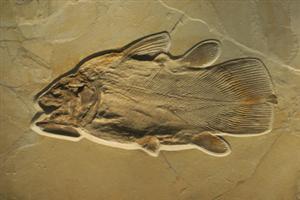
Do fossils near the edge of an earthquake zone shift more than those near the center? You bury five chicken bones at equal spacing inside a soil-filled fish tank. Then you shake the table for ten minutes to simulate seismic tremors.
Afterward, you carefully remove the soil layer by layer. You measure the new depth of each bone. Bones near the tank walls sink the most, while the center bone barely moves.
Hypothesis
The hypothesis is that the bone located in the middle of the container will experience the greatest vertical displacement.
Method & Materials
You will set up a fish tank with soil and water, place five chicken drumstick bones at different distances from the left wall of the tank, and then shake the table with the fish tank on it for 10 minutes.
You will need a transparent fish tank, five dried chicken drumstick bones, loam soil, a table to support the fish tank, a stopwatch, a metal rod or metal ruler, a ruler, and a black marker.
Eureka Crate — engineering & invention kits for ages 12+ — monthly projects that build real-world skills. (Affiliate link)
See what’s includedResults
The results showed that the bones located near the tank walls had the highest displacement, while the bone near the center of the tank had the least downward displacement.
Why do this project?
This science project is interesting and unique because it allows us to explore the effects of seismic activity on the displacement of bones in soil.
Also Consider
Experiment variations could include testing which soil varieties are most susceptible to liquefaction, or testing the displacement of materials of different density and sizes.
Full project details
Additional information and source material for this project are available below.Related videos
These videos explain the science behind this project and demonstrate key concepts used in the experiment.
Share this Science Project:
Browse by Grade
Related Science Fair Project Ideas
Drill a one-meter soil core with an auger and map each layer by its color and texture.
Hard
Drag a brick with an elastic cord and watch a vibration sensor record the stop-and-go jolts that mimic earthquakes.
Hard
Map nearly 250 landslides from aerial photos and ground surveys to find out what triggers hillside collapse near salmon streams.
Hard
Share this Science Project: