

Ionizing vs. Photoelectric Smoke Detectors
Medium
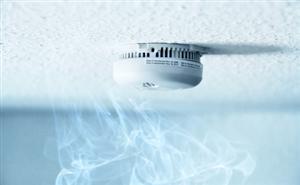
Which type of smoke detector reacts faster to smoke? The two most common types are ionizing and photoelectric. They use different methods to sense smoke particles in the air.
You place a lit cigarette at five distances from each detector: 200mm, 400mm, 600mm, 800mm, and 1000mm. Then you time how many seconds each detector takes to trigger its alarm.
The ionizing detector triggered faster at every distance. At 200mm it fired in 6 seconds vs. 8 for the photoelectric. At 1000mm the gap was 46 seconds vs. 55.
Hypothesis
The hypothesis is that the ionizing smoke detector will be able to detect smoke more quickly.
Science Concepts Learned
Ionizing Radiation
When ionizing radiation passes through air, it knocks tiny parts out of atoms, creating charged particles that conduct a small electric current inside a detector. Smoke drifting into that current disrupts the flow and triggers the alarm. That mechanism explains why the ionizing detector fired faster at every distance — responding in 6 seconds at 200mm compared to 8 seconds for the photoelectric model, which senses smoke by a different method.
Method & Materials
You will compare the effectiveness of ionizing and photoelectric smoke detectors by measuring the time it takes for each type of detector to detect smoke from a cigarette.
You will need a photoelectric smoke detector, an ionizing smoke detector, two alarms, a pack of cigarettes, a lighter, an ashtray, a long ruler, and a stopwatch.
Eureka Crate — engineering & invention kits for ages 12+ — monthly projects that build real-world skills. (Affiliate link)
See what’s includedResults
The results showed that the ionizing smoke detector was more sensitive and able to detect the cigarette smoke faster than the photoelectric smoke detector. This proves that the hypothesis was correct.
Why do this project?
This science project is interesting because it compares two different types of smoke detectors and shows which one is more effective.
Also Consider
Consider repeating this science project by using other sources of smoke like a candle, joss stick or burning papers. You could also repeat the experiment by placing the smoke detector in different positions around the smoke detector.
Full project details
Additional information and source material for this project are available below.Related videos
These videos explain the science behind this project and demonstrate key concepts used in the experiment.
Share this Science Project:
Browse by Grade
Related Science Fair Project Ideas
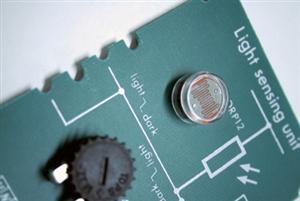
Run 100 boxes past a light sensor and a touch sensor at increasing conveyor speeds to see which one keeps an accurate count.
Medium

Strike a snare drum with titanium, aluminum, hickory, and oak drumsticks to find out which material bounces back the highest.
Medium

Hang weights from seven types of string for ten hours and discover which one refuses to stretch even a millimeter.
Medium
Share this Science Project: