

Acid Rain and Algae Survival
Medium
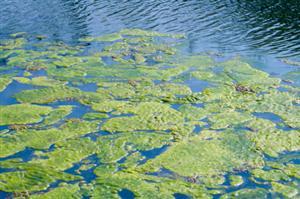
How does acid rain affect different types of pond algae? You prepare nine beakers of distilled water at three pH levels: 7 (neutral), 6, and 5. You add sulfuric acid to lower the pH. Then you place samples of spirogyra, green algae, and red algae into the matching beakers.
After five days, the results split sharply. Red algae survive at every pH level. Green algae tolerate pH 6 but die at pH 5. Spirogyra cannot handle any acidity and die in both acidic conditions.
Hypothesis
The hypothesis is that green algae and red algae will be able to survive in acidic water as they are acidophilic plants.
Science Concepts Learned
Algae
Not all algae respond to harsh conditions the same way. Some types, like red algae, survive in acidic water, while others like spirogyra die at even moderate acidity. This experiment places spirogyra, green algae, and red algae in water at different pH levels to reveal how each type tolerates acid rain.
Method & Materials
You will separate the beakers into 3 groups and label them with the type of algae and the pH level. You will add sulfuric acid to the beakers to get the desired pH level. You will observe the algae over a period of time.
You will need 15 ml of spirogyra algae, 15 ml of green algae, 15 ml of red algae, 9 beakers, 1 bottle of sulfuric acid, 1800ml of distilled water, 1 measuring cylinder, several pieces of pH paper, and 1 black marker pen.
Tinker Crate — science & engineering build kits for ages 9–12 — real tools, real experiments, delivered monthly. (Affiliate link)
See what’s includedResults
The experiment showed that red algae is able to survive in the acidic water and is acidophilic. Green algae is able to tolerate a small amount of acidity in the water but spirogyra cannot survive in acidic waters at all.
Why do this project?
This science project is interesting because it shows how acid rain can have a negative effect on the environment.
Also Consider
What would happen if this science fair project was repeated using other acids such as hydrochloric acid or nitric acid? Have you wondered whether algae are able to survive in basic (alkaline) solutions?
Full project details
Additional information and source material for this project are available below.Related videos
These videos explain the science behind this project and demonstrate key concepts used in the experiment.
Share this Science Project:
Related Science Fair Project Ideas
Place guppies in five tanks at different acid levels and track survival every two hours to find the tipping point.
Medium
Add denitrifying bacteria to pond water and track whether nitrate levels drop faster than in untreated samples over three weeks.
Medium
Collect water from a boatyard, marina, beach, and tap, then send all four to a lab to compare heavy metal levels.
Medium
Share this Science Project: