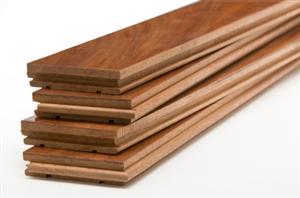
Does a denser material block more sound? You build a plywood box with a removable panel on one side. A battery-powered siren goes inside the box.
You swap the front panel between four materials of equal thickness: plywood, bakelite, glass, and marble. Each has a different density. A decibel meter placed 500 mm from the panel measures how loud the siren sounds through each material.
The results show whether the densest materials consistently reduce the most noise.
Hypothesis
The hypothesis is that higher density materials will transmit less sound.
Different materials block noise by different amounts. You build a plywood box with a removable front panel, place a battery-powered siren inside, and swap the panel between plywood, bakelite, glass, and marble. A decibel meter placed 500 mm from the panel measures how much sound passes through each one. The results show whether denser materials consistently reduce more noise.
Vibrations change depending on what material they travel through. To see this, a battery-powered siren goes inside a plywood box with a removable front panel. Swapping that panel between four materials — plywood, bakelite, glass, and marble, each cut to equal thickness — changes how much sound escapes. A decibel meter placed 500 mm away records the volume through each one. The results show whether the densest materials consistently reduce the most noise.
Method & Materials
You will make a box and place a siren inside it. You will measure the noise level outside the box with a decibel meter. Then you will replace the material on the front side of the box with different materials of varying densities and measure the noise level outside the box again.
You will need a decibel meter, a battery operated siren, a 300mm x 300mm x 300mm plywood box, a 250mm x 250mm piece of plywood, a 250mm x 250mm bakelite, a 250mm x 250mm sheet of glass, a 250mm x 250mm marble tile, and a ruler.
MEL Physics — hands-on physics experiment kits delivered monthly — real experiments, not just reading. (Affiliate link)
The results showed that the higher density materials of glass and marble tile had the lowest noise level and plywood, the lowest density material, had the highest noise level recorded by the decibel meter. This proves that higher density materials are very good sound barriers.
Why do this project?
This science project is interesting because it explores how sound travels and how the density of a material affects how much sound it transmits.
Also Consider
Experiment variations include comparing different elastic materials like rubber and metal, and repeating the experiment with different sources of sound like a portable CD player.
Full project details
Additional information and source material for this project are available below.