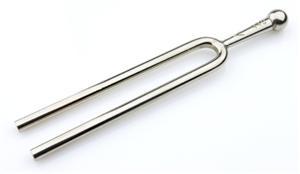
Does heating or cooling a tuning fork change the pitch it produces? You take a 640 Hz tuning fork and test it at five temperatures: 0, 25, 50, 75, and 100 degrees Celsius.
You chill the fork overnight in a freezer, then warm it in stages using a beaker of heated water on a stove. At each temperature, you strike the fork and measure its frequency with a sound sensor and scope.
The data shows a small but steady drop in frequency as the tuning fork gets hotter.
Hypothesis
The hypothesis is that the frequency of sound from a tuning fork will decrease as the temperature increases.
Temperature can shift how many times per second an object vibrates. A 640 Hz tuning fork tested at five temperatures from 0 to 100 degrees Celsius shows a small but steady drop as the fork gets hotter. Heat affects the rate of vibration even in a precisely manufactured instrument.
Heat changes how a tuning fork vibrates, which shifts the pitch it produces. You chill a 640 Hz fork overnight in a freezer, then warm it in stages using a beaker of heated water on a stove. At each of five temperatures — 0, 25, 50, 75, and 100 degrees Celsius — you strike the fork and measure its frequency with a sound sensor and scope. The data shows a small but steady drop in frequency as the fork gets hotter.
Method & Materials
You will measure the frequency of a tuning fork at different temperatures and see if the sound changes.
You will need a tuning fork, a sound sensor and scope, a beaker, some water, a stove, a refrigerator, and an infrared thermometer.
MEL Physics — hands-on physics experiment kits delivered monthly — real experiments, not just reading. (Affiliate link)
The experiment showed that when the temperature of the tuning fork increased, there was a slight reduction in the frequency sound generated.
Why do this project?
This science project is interesting because it shows how temperature can affect the sound of a tuning fork, which is used in many different applications.
Also Consider
Variations of this experiment could include using a tuning fork made from a different material, or using tuning forks of different frequencies.
Full project details
Additional information and source material for this project are available below.