

Dog Color Vision and the Red-Green Puzzle
Hard

Can dogs tell blue from yellow but not red from green? Most people assume dogs see only in black and white. The truth is more interesting.
You train five dog breeds to pick a blue box for a ball and a red box for a bone. After two weeks of training, you place all four colored boxes together. Each dog gets ten tries to find the right one.
The dogs pick the blue box correctly about 82% of the time. But with red and green boxes, they score only 46% — no better than random chance.
Hypothesis
The hypothesis is that dogs are able to differentiate between blue and yellow colors.
Science Concepts Learned
Color Vision in Animals
The cells in an animal's eyes may distinguish some colors but not others. To test this in dogs, you train five breeds to pick a blue box for a ball and a red box for a bone over two weeks. Then you place all four colored boxes together and give each dog ten tries. The dogs pick the blue box correctly about 82% of the time. With red and green boxes, though, they score only 46% — no better than random chance. That pattern suggests dogs can tell blue from yellow but cannot separate red from green.
Method & Materials
You will train five different breeds of dogs for two weeks, then test them by placing two boxes of different colors in front of them and seeing which one they choose.
You will need five plastic balls, five plastic dog bones, five breeds of dogs with their owners or trainers, four boxes of the same size wrapped in blue, yellow, red, and green color papers, one box of dog snacks, and one spray can of air refresher.
Eureka Crate — engineering & invention kits for ages 12+ — monthly projects that build real-world skills. (Affiliate link)
See what’s includedResults
The results of the experiment showed that the dogs were able to differentiate between the blue and yellow boxes, but not between the red and green boxes. On average, the dogs chose the correct box 82% of the time for the blue and yellow boxes, and 46% of the time for the red and green boxes.
Why do this project?
This science project is interesting because it explores the color vision of dogs and whether they can differentiate between colors, which is something that has been debated for a long time.
Also Consider
Variations of this experiment could include repeating it with different breeds of dogs, or using different combinations of colored boxes.
Full project details
Additional information and source material for this project are available below.Related videos
These videos explain the science behind this project and demonstrate key concepts used in the experiment.
Check out this student's science project to find out if dogs see color! I wonder if this experiment could be improved by training the dog for a longer time on the blue cup with treats. In the 2nd part of the experiment, the dog may have gone to the other colored cups because he didn't find treats in the blue cup!
Watch this video summarizing the colors dogs can see. What other experiments can you conduct to test these discoveries with your dog?
Share this Science Project:
Browse by Grade
Related Science Fair Project Ideas
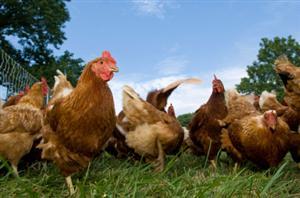
Time roosters and hens racing to a food tray with and without a log obstacle to see which group adapts faster.
Hard
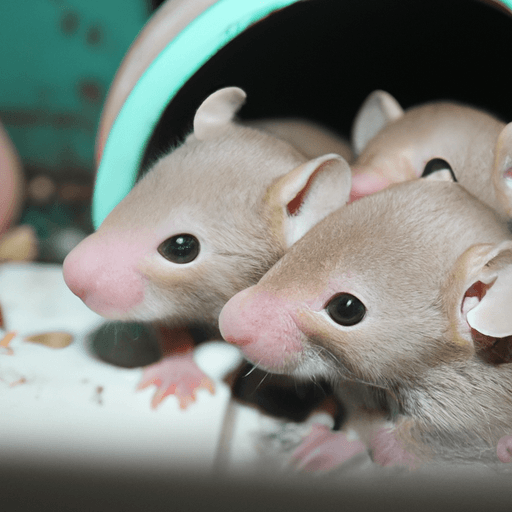
Race male and female mice through a cardboard maze, then use a T-maze to discover each mouse's paw preference.
Hard
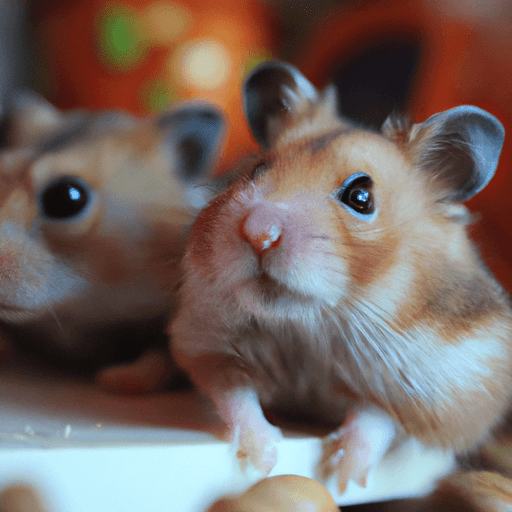
Build a cardboard maze, send hamsters and mice through it ten times each, and discover which species learns the route faster.
Hard
Share this Science Project: