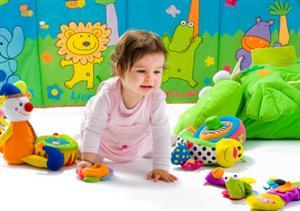
Do babies as young as four months already prefer certain toys? You set up a toy truck and a doll behind a curtain at a daycare center. One at a time, you reveal both toys to 10 boys and 10 girls aged 4 to 8 months.
You watch each baby's eye movements for 10 seconds. You repeat the test three times per baby and swap the toy positions each round. The boys gaze at the truck more often. The girls gaze at the doll more often.
Hypothesis
The hypothesis is that baby boys will prefer trucks and baby girls will prefer Barbie dolls.
Nature vs Nurture becomes especially interesting when the subjects are too young for life experience to play a large role. Babies aged 4 to 8 months have had almost no cultural training, yet the boys gaze at the truck more often and the girls gaze at the doll more often in a controlled toy-preference test. Because the toy positions are swapped each round to prevent bias, the pattern suggests that some preferences may come from birth rather than from life experience.
Studying behavior by watching what happens — without changing anything — is the core of observational research. In a toy-preference study at a daycare center, you set up a truck and a doll behind a curtain and reveal both toys to each baby one at a time. You watch each baby's eye movements for 10 seconds, then repeat the test three times per baby, swapping the toy positions each round. No physical intervention takes place. That careful watching protocol alone — not any manipulation of the babies or the toys — produces the data about which toy each baby prefers.
Method & Materials
You will need permission from a daycare center to conduct the experiment, 10 baby boys and 10 baby girls, a Barbie doll, a toy truck, a curtain, a stopwatch, and an assistant. The experiment involves observing the baby's eye movements for 10 seconds to determine which toy the baby prefers.
You will need permission from a daycare center, 10 baby boys and 10 baby girls, a Barbie doll, a toy truck, a curtain, a stopwatch, and an assistant.
Eureka Crate — engineering & invention kits for ages 12+ — monthly projects that build real-world skills. (Affiliate link)
The results showed that all of the baby boys gazed at trucks more often, while the baby girls gazed at Barbie dolls more often. This suggests that the baby's gender affects its preference for toys.
Why do this project?
This science project is interesting because it explores the idea that babies may have a preference for certain toys based on their gender, even though they may not be able to differentiate gender yet.
Also Consider
Consider repeating the experiment with 18 month-old babies, or using a Barbie doll and a GI Joe doll instead of trucks.
Full project details
Additional information and source material for this project are available below.