Search for Science Fair Projects

1000 Science Fair Projects with Complete Instructions

Renewable Energy Science Fair Project

Wave Height, Frequency, and Power Output
Hard
Wave Height, Frequency, and Power Output | Science Fair Projects | STEM Projects
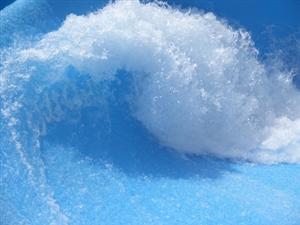
Do bigger waves always make more electricity? Ocean wave energy is one way to generate renewable power. The output depends on wave size and speed. You build a wave tank with a paddle that creates waves at different heights. A floating raft holds a magnet that swings through a coil as waves rock it. This motion generates a small voltage you measure with a voltmeter. You test wave heights from 10 to 40 cm at two speeds. You record how the voltage changes with each setting.

Hypothesis

The hypothesis is that the higher the frequency or the amplitude of a wave, the greater the voltage of electricity produced.

Method & Materials

You will fill a 5 meter long container with water, install a wave generator, and affix a coil and magnet to a wooden raft. You will then measure the voltage induced in the coils by turning the wheel of the wave generator and adjusting the amplitude of the wave.
You will need a 5 meter long container, a wave making device, 2 copper wire wound coils, a strong magnet, a metal plate, 2 pieces of wood, hammer and nails, a wooden raft, electric wires, 2 rectifiers with capacitors, tap water, a digital voltmeter, masking tape, and an assistant.

Eureka Crateengineering & invention kits for ages 12+ — monthly projects that build real-world skills. (Affiliate link)

See whats included

Results

The results showed that increasing the wave cycle and amplitude resulted in a higher electrical voltage. Our hypothesis that wave cycles at a higher frequency and at a higher amplitude will produce higher electrical voltages, is proven to be true.

Why do this project?

This science fair project is interesting and unique because it allows students to explore the power of the ocean and learn how to generate electricity from the waves.

Also Consider

Experiment variations include using water of a different density (e.g. sea water) and making waves by blowing wind across the surface of the water using a large fan.

Full project details

Additional information and source material for this project are available below.

Related videos

These videos explain the science behind this project and demonstrate key concepts used in the experiment.
Share this Science Project:

Related Science Fair Project Ideas

Bioethanol vs. Fossil Fuels: Energy and Burn Time
Burn equal amounts of bioethanol, kerosene, diesel, and gasoline to compare which heats water most and which burns longest.
Hard
Wind Turbine Blade Angle and Voltage Output
Mount zinc-sheet blades at seven different angles on a DC motor and discover which angle produces the highest voltage from wind.
Hard
Forest, Farm, and Compost Soil Quality
Collect soil from a forest and two farmed fields to see how management changes its color and nutrient levels.
Hard
Share this Science Project: