Friction Losses in DC Motors by Size
Hypothesis
Science Concepts Learned
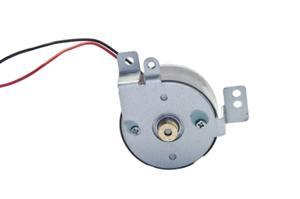
Friction acts inside machines, not just between surfaces you can see. In a DC motor, spinning parts rub against each other, slowing them down and wasting energy as heat. To measure these internal losses, you run four DC servomotors — ranging from 30 to 100 watts — with no load, recording the voltage and current going in. Then you cut the power and time how long each motor takes to stop. Bigger motors have larger moving parts, which creates more rubbing, and the data confirms it: they lose more energy to friction.
Not all the power a motor consumes does useful work. Some of it fights internal friction, converting energy into heat instead of motion. To measure that loss, you run four DC servomotors — ranging from 30 watts to 100 watts — with no load, measuring the input voltage and current. Then you switch off the power and time how long each motor takes to stop. Bigger motors have larger moving parts, and as the data shows, they lose more energy to friction — because larger moving parts consume power faster, even when the motor isn't doing any work.
The current flowing into a motor tells you how hard it is working, even when it has nothing to drive. You run four DC servomotors — ranging from 30 to 100 watts — with no load, measuring the voltage and current at each motor's input with a multi meter and an ammeter. Then you cut the power and time how long each motor takes to stop. Bigger motors have larger moving parts and more friction, so more charged bits must flow through the wire to keep them spinning. That extra current shows up directly in the input power measurement.
Every DC motor converts electric current into rotational motion through magnetic force, but some energy is always lost fighting internal friction. To measure how much, you run four DC servomotors with no load, ranging from 30 watts to 100 watts. You measure the voltage and current going in, then switch off the power and time how long each motor takes to stop. From the input power and stopping time, you calculate the friction loss. Bigger motors have bigger moving parts — and the results show they lose more energy to friction rather than producing useful rotation.
Method & Materials
MEL Physics — hands-on physics experiment kits delivered monthly — real experiments, not just reading. (Affiliate link)
See what’s includedResults
Why do this project?
Also Consider
Full project details
Additional information and source material for this project are available below.Related videos
Browse by Grade
Related Science Fair Project Ideas