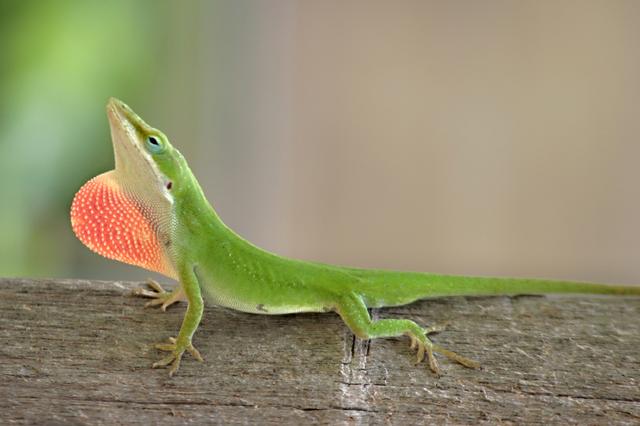
Why do some lizards change color when the temperature drops? Most people think color change is about camouflage. For anoles, it is mostly about body heat.
Anoles are cold-blooded reptiles that cannot generate their own warmth. You observe an anole in a terrarium at its ideal temperature range of 75 to 90 degrees Fahrenheit. Then you lower the temperature to 70 degrees by adjusting the lamp.
After 30 minutes, check the skin color again. The shift reveals how these lizards use pigment to regulate body temperature.
Hypothesis
The hypothesis is that lizards can change their skin color to regulate their body temperature.
Anoles are cold-blooded reptiles that cannot generate their own warmth, so they use other strategies to control body heat — including shifting skin color. You observe an anole in a terrarium at its ideal temperature range of 75 to 90 degrees Fahrenheit. Then you lower the temperature to 70 degrees by adjusting the lamp. After 30 minutes, you check the skin color again. The shift in pigment reveals how these lizards regulate body temperature by changing color rather than burning energy from within.
Some ectotherms use color change to manage how much heat they absorb from their surroundings. Anoles are cold-blooded reptiles that cannot generate their own warmth. Lowering the temperature in their terrarium to 70 degrees triggers a visible shift in skin color, revealing how these lizards use pigment to regulate body temperature.
Method & Materials
You will observe the color of the anole's skin when the temperature is in the ideal range, then lower the temperature to 70 degrees and observe the color of the anole's skin.
You will need an anole lizard, a terrarium and other equipment to house and care for the anole, a table lamp with an incandescent bulb, and a thermometer.
Eureka Crate — engineering & invention kits for ages 12+ — monthly projects that build real-world skills. (Affiliate link)
The results of this experiment showed that when the temperature was lowered, the anole's skin changed from a dark brown to a light green. This suggests that the anole was using its skin color to regulate its body temperature.
Why do this project?
This science project is interesting and unique because it explores how two species of tropical lizards use their skin color to regulate their body temperature.
Also Consider
Variations of this experiment could include observing the anole's skin color when the temperature is increased, or observing the skin color of a different species of lizard.
Full project details
Additional information and source material for this project are available below.