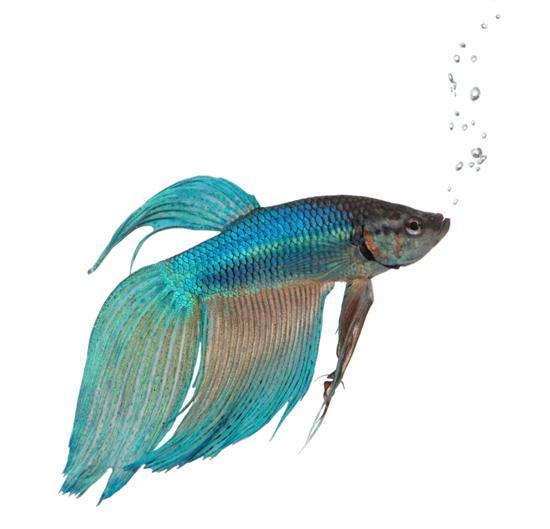
What happens when a betta fish sees its own reflection over and over? Male bettas flare their fins and gills to warn rival males away. You place a mirror against the tank and watch the betta react. Then you remove the mirror and show it again after one minute.
Each time you present the mirror counts as one trial. You repeat trials until the betta stops reacting. The next day you test again to see if the fish remembers. This shows two ways animals stop responding. Extinction means the warning fails to work. Habituation means the fish gets used to it.
Hypothesis
The hypothesis is that the betta fish's aggressive behavior will diminish with time.
Sometimes a living thing stops reacting to a repeated change — a process called habituation. Male bettas flare their fins and gills to warn rival males away. You place a mirror against the tank and the betta reacts. Then you remove the mirror and show it again after one minute. Each time you present the mirror counts as one trial. You repeat trials until the betta stops reacting. The next day you test again to see if the fish remembers. Two distinct patterns emerge: extinction, where the warning fails to work, and habituation, where the fish simply gets used to it.
Animals can also lose a stored response over time. Male bettas flare their fins and gills to warn rival males away — but place a mirror against the tank repeatedly and something changes. You show the mirror, remove it, then show it again after one minute; each presentation counts as one trial. As you repeat trials, the betta stops reacting. The next day you test again to see whether the fish remembers. This reveals two ways animals stop responding: extinction, where the warning fails to work, and habituation, where the fish simply gets used to it.
Habituation is when an animal stops reacting to something because it has seen it many times. Male betta fish flare their fins and gills to warn rival males away. Showing a mirror to a betta over repeated trials reveals that its aggressive behavior diminishes with time as the fish gets used to the unchanging reflection.
Method & Materials
You will observe the reaction of the betta when presented with a mirror, and record the number of trials before its response to the mirror diminishes.
You will need a betta fish and fish supplies, a mirror, and a data sheet.
Eureka Crate — engineering & invention kits for ages 12+ — monthly projects that build real-world skills. (Affiliate link)
The results of the experiment showed that the betta's aggressive behavior diminished with time. The most interesting observation was that the betta's response to the mirror decreased significantly after the first day of the experiment.
Why do this project?
This science project is interesting because it shows how a betta fish can learn to ignore a stimulus over time.
Also Consider
Variations of this experiment could include testing the betta's response to different stimuli, or testing the betta's response to the same stimulus over a longer period of time.
Full project details
Additional information and source material for this project are available below.