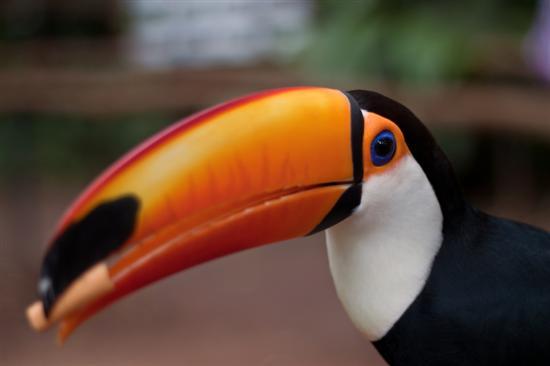
Why do different bird species have such different beak shapes? Each beak is shaped to match what that bird eats. You visit a bird facility and pick five species with different beak shapes. Then you photograph or draw each one.
Next you visit a hardware store and find tools that match each beak shape. A long thin beak might match a probe. A short heavy beak might match a nutcracker. You use each tool's function to guess what the bird eats. Then you research the actual diet online and check your predictions.
Hypothesis
The hypothesis is that the shape of a bird's beak is related to what it eats.
Each bird beak is shaped to match what that bird eats, and that match is the result of traits fitting the food source. Visit a bird facility and photograph five species with different beak shapes. Then visit a hardware store and find tools that match each one — a long thin beak works like a probe, a short heavy beak like a nutcracker. Use each tool's function to predict the bird's diet, then check your predictions online.
Each bird species has a beak shape that matches what that bird eats. A long thin beak might match a probe. A short heavy beak might match a nutcracker. Comparing beaks to tools helps predict each bird's diet.
Method & Materials
You will visit a bird facility, take pictures of different birds, find tools that resemble the beaks, and research the birds' diets.
You will need internet access, access to a bird facility, a camera, and a journal.
Tinker Crate — science & engineering build kits for ages 9–12 — real tools, real experiments, delivered monthly. (Affiliate link)
After completing the experiment, we found that the shape of a bird's beak is related to what it eats. The most interesting observation was that the design of the high speed bullet-train, the Shinkansen, was borrowed from the beak of the Kingfisher.
Why do this project?
This science project is interesting because it shows how nature can be used to inspire human inventions.
Also Consider
Variations: Try to find other tools that resemble bird beaks, or research the purpose of the beaks beyond just obtaining food.
Full project details
Additional information and source material for this project are available below.
These videos explain the science behind this project and demonstrate key concepts used in the experiment.
Get ready to be amazed by the incredible variety of birds and their beaks! These videos shows how the different shapes and sizes of their beaks help them to eat a variety of foods. From long, thin beaks for sipping nectar to sharp, pointy beaks for catching fish, you'll discover the amazing adaptations that help birds survive in their unique environments!