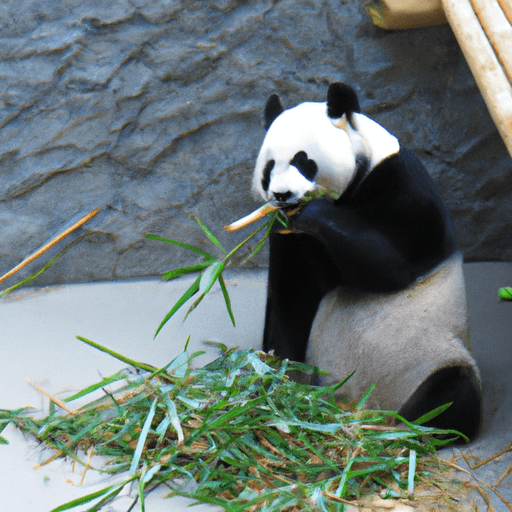
How much do people really know about endangered and extinct animals? This project uses a survey to find out.
You write a questionnaire with factual questions about endangered species. Questions cover topics like why pandas are at risk and what causes extinction. You hand the survey to a random sample of people and score their answers.
You chart the results to see which facts most people know and which ones they get wrong. The findings highlight gaps in public knowledge about wildlife.
Hypothesis
The hypothesis is that the majority of the responses to the factual questions on the questionnaire will be correct.
Good survey methodology means asking questions so you get useful answers, and that starts with careful design. You write a questionnaire with factual questions, hand it out to a random sample of people, and score the questionnaires to produce data you can analyze. Charting the results reveals which facts most people know and which ones they get wrong, turning raw survey responses into clear findings.
Many animals and plants stand at risk of dying out forever. Public awareness of those threats varies widely. When you survey a random sample of people with factual questions, the scored answers show which facts most people know and which they get wrong. Gaps in public knowledge about wildlife show where education efforts need the most focus.
Method & Materials
You will write a statement of purpose, review literature, develop a hypothesis, write a questionnaire, hand it out to students, score the questionnaires, analyze the data, and write a summary and conclusion.
You will need a topic, statement of purpose, review of literature, hypothesis, questionnaire, data collection sheet, and simple statistics, charts, and graphs.
Tinker Crate — science & engineering build kits for ages 9–12 — real tools, real experiments, delivered monthly. (Affiliate link)
The survey results showed that the majority of students knew that extinct means that a species of animal is no longer around, and that the leading cause of extinction is destruction of habitat. The most interesting observation was that a majority of 96% felt that governments should have harsher punishments for poachers.
Why do this project?
This science project is interesting and unique because it gives students the opportunity to learn about endangered species and their habitats, and to express their opinions on how to protect them.
Also Consider
Experiment variations to consider include surveying a different age group, or surveying a different school.
Full project details
Additional information and source material for this project are available below.