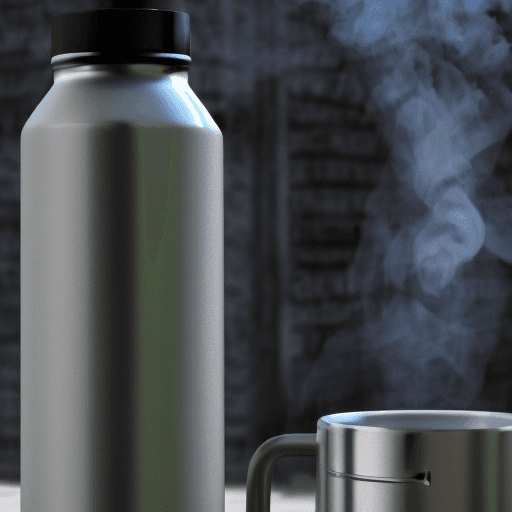
Can everyday materials keep water hot as long as a thermos does? A thermos uses a vacuum to block heat transfer. Other materials rely on trapping air or reflecting heat. This project puts them side by side.
You fill a thermos with boiling water and cap it. Then you fill several same-size jars with boiling water and wrap each one in a different material. Test materials you have at home such as newspaper and foam. Also try wool and foil. Measure the temperature every hour or two with a thermometer.
Plot the temperature over time for each container. You can also test combinations and different thicknesses. Compare each curve to the thermos to find the best insulator.
Hypothesis
The hypothesis is that some materials will be better insulators than others.
A thermos uses a vacuum to block heat transfer, while materials like newspaper and foam rely on trapping air to slow heat from escaping. You fill same-size jars with boiling water, wrap each in a different material, and measure the temperature every hour or two. Plotting each container's cooling curve alongside the thermos shows which material comes closest to slowing heat loss as effectively.
Some materials hold onto warmth far better than others. A thermos uses a vacuum to block heat transfer, while newspaper and foam rely on trapping air. Comparing their temperature curves over time reveals which method keeps water hot the longest.
Method & Materials
You will fill several containers with boiling water and measure the temperature with a thermometer every hour or two.
You will need a thermos, several jars, boiling water, and a thermometer.
MEL Physics — hands-on physics experiment kits delivered monthly — real experiments, not just reading. (Affiliate link)
Our experiment showed that some materials are better insulators than others. The best insulator was the thermos, which kept the boiling water the hottest for the longest amount of time.
Why do this project?
This science project is interesting because it allows us to explore how different materials can affect the temperature of boiling water.
Also Consider
Experiment variations to consider include testing different thicknesses of insulation materials and testing combinations of materials.
Full project details
Additional information and source material for this project are available below.