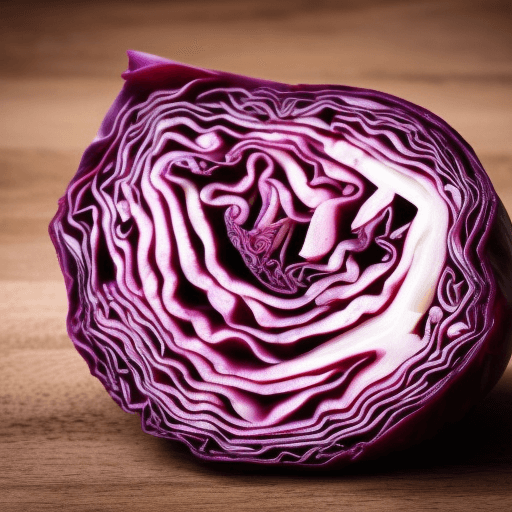
Can cabbage juice tell you whether a liquid is an acid or a base? Red cabbage contains a natural pigment that changes color depending on the pH (acidity level) of the liquid it touches.
You grate half a head of red cabbage and boil it in water for about 30 minutes. The liquid turns dark purple. Strain out the cabbage and save the juice. Then add a few drops of the juice to different household liquids like vinegar and soapy water.
Vinegar turns the juice pink. Soapy water turns it green or blue. Each color tells you where the liquid falls on the acid-to-base scale.
Hypothesis
The hypothesis is that the cabbage juice will turn pink in acidic solutions and green in basic solutions.
Red cabbage contains a natural pigment that reacts visibly when it meets an acid or a base. When you add a few drops of the purple juice to vinegar, it turns pink. Touch it to soapy water and it shifts to green or blue. Each color tells you exactly where that liquid falls on the acid-to-base scale.
pH indicators are substances that change color to show whether a liquid is an acid or a base. Red cabbage contains a natural pigment that works this way. You add a few drops of boiled cabbage juice to household liquids like vinegar. The juice turns pink, telling you vinegar is an acid.
Red cabbage contains a natural pigment that shifts color depending on the pH — the acidity level — of whatever liquid it touches. You boil grated cabbage in water, strain out the solids, and add a few drops of the dark purple juice to household liquids. Vinegar turns it pink. Soapy water turns it green or blue. Each color tells you where that liquid falls on the acid-to-base scale.
Anthocyanins respond differently to acidic and basic liquids. Vinegar is an acid, and it turns cabbage juice pink. Soapy water is a base, and it shifts the color to green or blue. Each color tells you where a liquid falls on the acid-to-base scale.
Method & Materials
You will grate the cabbage, boil it in water, strain the liquid, and make up some test acid/base solutions.
You will need a half head of red cabbage, a metal grater, a pot, a strainer, and some acid/base solutions.
Tinker Crate — science & engineering build kits for ages 9–12 — real tools, real experiments, delivered monthly. (Affiliate link)
Through this experiment, you will observe that the cabbage juice turns pink in acidic solutions and green in basic solutions. You can also use the indicator on other solutions of interest or dry it on coffee filters to create a simple form of "pH paper."
Why do this project?
This science project is unique because it allows students to make their own acid/base indicator using a common vegetable.
Also Consider
Experiment variations to consider include testing different types of vegetables to see if they can be used as indicators, or testing different types of solutions to see how the indicator reacts.
Full project details
Additional information and source material for this project are available below.