Science Fair Projects Ideas

All Science Fair Projects

Over 500 FREE Science Fair Project Ideas!

  Search    Browse    Forum  Coach    Links    Editor    Help    Tell-a-Friend    Encyclopedia    Dictionary     
 
Top 20 Science Project Searches
Science Fair Coach
What do science fair judges look out for?
Hide details  | Sort by popularitySort by titleSort by difficulty Bookmark this page
Can DNA be separated from other Cell components and Survive?Featured science project
The purpose of this experiment was to see, by extracting DNA from an onion; if DNA could survive separated from other cell components. I became interested in this idea while I was watching "DNA: The Life Cell" on "The Discovery Channel" The information gained from this experiment will benefit society by seeing if DNA will be safe separated from the other cell components.
Difficulty: High school
Demonstrate the principles of Mendelian genetics
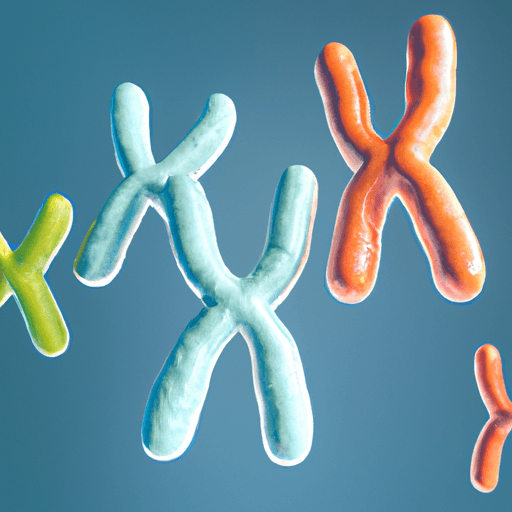
Students will work in pairs in the lab to produce a dragon from the random mixing of genetic traits. Each student will be a surrogate dragon parent. They will pick up a complete set of dragon chromosomes. Surrogate dragon parent partners must be of the opposite sex, therefore one parent must pick up the double X chromosomes while the other must pick up the X/Y chromosomes. The homologous chromosom
Difficulty: Elementary school
Describe How Cells Duplicate and Why & Where Something Can Go Wrong
Cells are the basic unit of function and structure in living things. After students have learned cell parts and organization, they are introduced to cell division. Understanding the role of deoxyribonucleic acid (DNA), and how and why it must replicate, is essential to comprehending how our genetic patterns are transmitted to new cells. Constructing a three-dimensional model of the DNA molecule en
Difficulty: High school
Designing a Chromosome
This activity will help students understand the link between genes and chromosomes and reinforce the concepts of dominant and recessive genes, incompletely dominant genes and co-dominant genes. It will also stimulate discussion and thought about what are or are not genetic traits.
Difficulty: High school
Determine if a person has genetically inherited tasting abilities.
The study of genetics/inherited traits is more than simply tracing back or predicting eye and hair color. Our genetic code is specific from one person to another. We do pass on other, more "unusual" traits, such as the ability to discern specific tastes in foods. PURPOSE: This activity was designed to involve students, family members, and selected peers in the process of determining whether
Difficulty: High school
Does Mass Affect the Emergence of a Soybean Seed?
The purpose of this project is to determine if mass affects the emergence of a soybean seed. This experiment was set up to verify if the size of a soybean affects how it grows.
Difficulty: High school
Explain the process of protein synthesis
Explain the process of protein synthesis through the use of a fairy tale analogy. Prior to this lesson, students should already have knowledge about DNA structure, RNA structure, and complementary base pairs
Difficulty: High school
Explaining the fundamentals of Genetics
Explain the fundamentals of Genetics 1. define terms dominant, recessive, heterozygous, homozygous, genotype, and phenotype 2. explain how Mendel derived ratios from his observations 3. calculate ratios, by using Punnett Squares 4. explain and complete monohybrid crosses 5. effectively manipulate the interactive website
Difficulty: Middle school
Generational effects of acid rain on Drosophila melanogaster
The purpose of this experiment was to test the effects of acid rain on several generations of living organisms. This researcher was interested in exploring whether mutations, found in an acid environment would also be observed if the offspring were removed from the acid environment into a neutral environment. Drosophila melanogaster were selected as subjects, due to their short life span, ease of
Difficulty: High school
How widespread is the occurrence of spliceosomal introns in the nuclear-encoded rDNA of lichen-forming and free-living members of the Ascomycota
Spliceosomal (pre-mRNA) introns have previously been found in eukaryotic protein-coding genes, in the small nuclear RNAs of some fungi, and in the small- and large-subunit ribosomal DNA genes of a limited number of ascomycetes. How the majority of these introns originate remains an open question because few proven cases of recent and pervasive intron origin have been documented.
Difficulty: High school
 Page 1 of 2  Bookmark this page


Search science fair projects Browse science fair projects

Science kits, science lessons, science toys, maths toys, hobby kits, science games and books - these are some of many products that can help give your kid an edge in their science fair projects, and develop a tremendous interest in the study of science. When shopping for a science kit or other supplies, make sure that you carefully review the features and quality of the products. Compare prices by going to several online stores. Read product reviews online or refer to magazines.

Copyright (C) 2010 All Science Fair Projects.com All Rights Reserved. Site
All Science Fair Projects Homepage
Search | Browse | Links | Handbook | From-our-Editor | Books | Help | Contact | Privacy | Disclaimer| Copyright notice