Polymer Sealant vs. Everyday Corrosives
Hypothesis
Science Concepts Learned
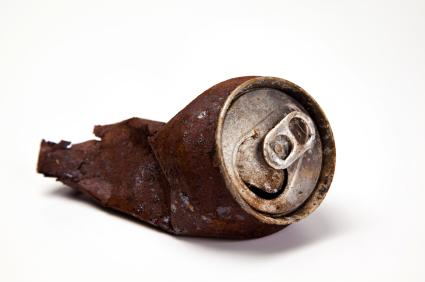
Corrosion happens when metals react with substances in their environment, and some everyday materials speed up that breakdown. In this experiment, metal sheets exposed to eggs, Clorox, and shaving cream showed the worst damage because those substances trigger faster chemical reactions with the metal surface. A polymer sealant slowed the process, but certain corrosives still broke through the protective layer over four weeks.
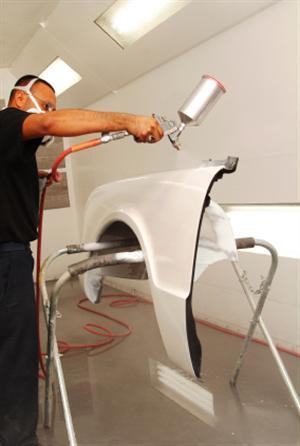
A polymer is a long chain of small repeating units that link together into a strong, flexible material. When applied to a surface, polymer sealant forms a continuous film that acts as a barrier against corrosive substances. This experiment tests that barrier by spray-painting 20 metal sheets cut from car body panels, then coating half with polymer sealant and leaving the other half unprotected. Over four weeks, ten everyday substances — egg, Clorox cleaner, bird droppings, soy sauce, tap water, sugar water, mouthwash, salad cream, cooking oil, and shaving cream — are spread across matched pairs of sheets. The results show that some corrosives can still damage paint even through the sealant layer, with eggs, Clorox, and shaving cream proving especially harmful.
A surface's ability to resist damage from corrosive substances is central to how well it holds up over time. A polymer sealant adds a protective layer over car paint, but some chemicals still cause harm. Eggs, Clorox, and shaving cream damage paint even through the sealant — showing that no single coating guarantees full protection.
Method & Materials
Eureka Crate — engineering & invention kits for ages 12+ — monthly projects that build real-world skills. (Affiliate link)
See what’s includedResults
Why do this project?
Also Consider
Full project details
Additional information and source material for this project are available below.Related Science Fair Project Ideas