

Age and Hand-Eye Coordination
Medium
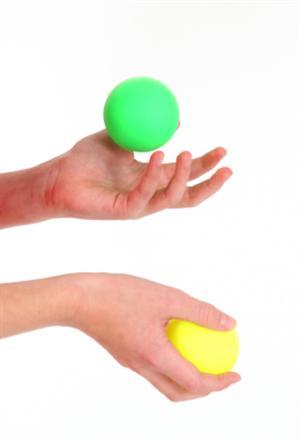
Does hand-eye coordination improve as you get older? You test 20 participants: ten who are age 10 and ten who are age 15. Each person bounces a ping pong ball between their hands for one minute.
The ball is dropped from one hand, bounced off the floor, and caught with the other hand. An assistant times each round with a stopwatch. You record how many successful catches each person makes.
Comparing the two age groups shows whether the older participants can catch the ball more often in the same amount of time.
Hypothesis
The hypothesis is that older children will have better hand-eye coordination than younger children.
Method & Materials
You will have 5 boys and 5 girls aged 10 and 5 boys and 5 girls aged 15. You will give each participant a ping pong ball and time how many times they can catch it in one minute.
You will need a ping pong ball, a stop watch, a flat floor surface, and an assistant to time the experiment.
Tinker Crate — science & engineering build kits for ages 9–12 — real tools, real experiments, delivered monthly. (Affiliate link)
See what’s includedResults
The results showed that the 15 year old children had better hand-eye coordination than the 10 year old children. The 15 year olds were able to catch the ping pong ball an average of 54-56 times compared to the 10 year olds who managed to catch the ball only 34-38 times.
Why do this project?
This science project is interesting because it shows how age affects hand-eye coordination, which is an important skill for everyday activities.
Also Consider
Experiment variations to consider include bouncing the basketball off a wall and catching it, or counting the number of times the children fail to catch the ball.
Full project details
Additional information and source material for this project are available below.Related video
These videos explain the science behind this project and demonstrate key concepts used in the experiment.
Share this Science Project:
Related Science Fair Project Ideas

Run a taste test where some people hear an expert opinion first and discover whether it changes what they choose.
Medium
Survey the colors of cars and clothes, then ask people their favorite color and see if the answers match.
Medium

Observe people in two different settings and count how often they make or avoid eye contact with those around them.
Medium
Share this Science Project: