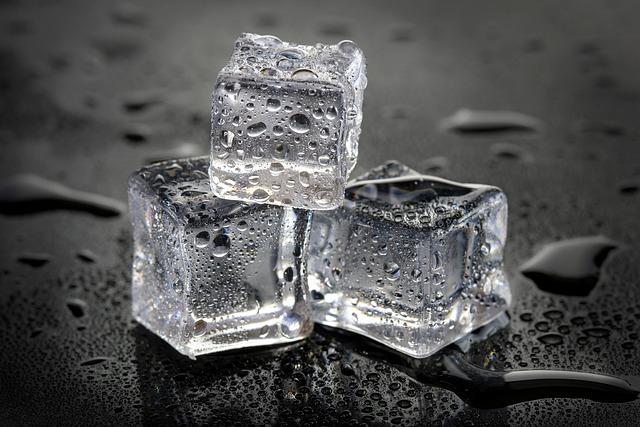
Why do cities spread salt on icy roads instead of sugar? Both lower the freezing point of water, but one does it far more than the other.
Prepare salt and sugar solutions at four concentrations (0.5, 1.0, 1.5, and 2.0 molar). Place each solution in a test tube, set all eight tubes in a salted ice bath, and record the temperature when the first ice crystals appear.
Both solutes push the freezing point below zero, but salt drops it nearly twice as far as sugar at every concentration.
Hypothesis
The hypothesis is that the freezing point of water will be lowered when sugar or salt is added.
Adding a solute like salt or sugar to water makes it freeze at a colder temperature — both push the freezing point below zero. To see the difference, you prepare salt and sugar solutions at four concentrations, place each in a salted ice bath, and record the temperature when the first ice crystals appear. Salt drops the freezing point nearly twice as far as sugar at every concentration, which is why cities spread salt on icy roads rather than sugar.
Adding a substance to water changes how it freezes. This experiment tests whether the freezing point of water will be lowered when sugar or salt is added, using eight varieties of solution. Recording when the first ice crystals start to form shows how dissolved particles shift the freezing point.
At its freezing point, a liquid crosses into solid — that exact temperature marks the phase change. You prepare salt and sugar solutions at four concentrations, place each in a test tube, then set all eight tubes in a salted ice bath. When the first ice crystals appear, you record the temperature. Both solutes push the freezing point below zero, but salt drops it nearly twice as far as sugar at every concentration.
Method & Materials
You will mix salt and sugar into water, pour the solution into ice cube trays, and place the trays in a freezer. You will label 8 beakers and test tubes, prepare 8 varieties of solution, and fill a basin with ice cubes. You will pour the solution into the test tubes, place the test tubes in the ice bath, and observe when the first ice crystals start to form.
You will need 1 packet of sugar, 1 packet of salt, 800ml of distilled water, 8 test tubes, 8 beakers, 1 basin, tap water, 1 freezer, ice cube trays, 8 thermometers, 1 digital weighing scale, and 1 black marker.
MEL Chemistry — hands-on chemistry experiment kits delivered monthly — great for building lab skills at home. (Affiliate link)
The results show that adding more sugar or salt to the solution will lower its freezing point. The hypothesis that a higher salt or sugar content in water will lower its freezing point has been proven to be true.
Why do this project?
This science project is interesting because it explores the concept of freezing point depression, which is useful in applications where water needs to be kept liquid, especially in the use of antifreeze in combustion engines operating at freezing temperatures.
Also Consider
Variations of this science project include comparing the effects of salt and sugar on the boiling point of water, and repeating the experiment using a different solvent, like alcohol or thinner.
Full project details
Additional information and source material for this project are available below.