
MEL Chemistry — hands-on chemistry experiment kits delivered monthly — great for building lab skills at home. (Affiliate link)
See what’s included

Easy
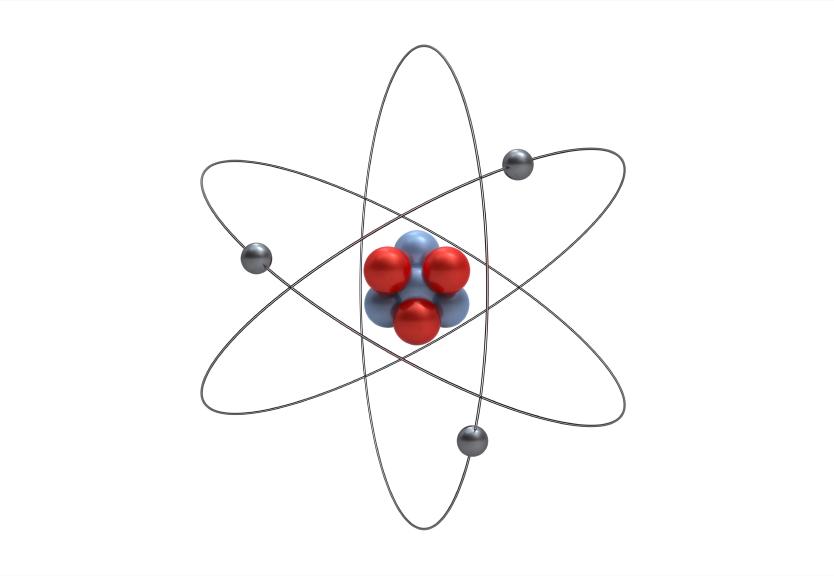
Build atom models from dried beans and rice to see how protons and neutrons pack into the nucleus.
Easy
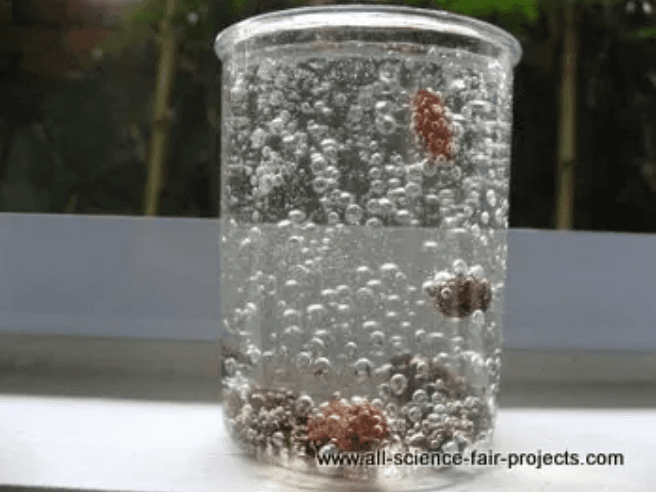
Drop raisins into a jar of vinegar and baking soda and watch them rise, float, and sink over and over again.

Easy
Combine baking soda and vinegar in a volcano mold and watch carbon dioxide gas drive a fizzing eruption.
Easy
Drip water onto a candy sitting on filter paper and watch hidden ink colors separate into colored rings.
Easy
Snap a baking-soda lid onto a vinegar-filled film canister and watch gas pressure launch it skyward.

Easy
Pour a yeast mixture into a bottle of hydrogen peroxide and watch a giant column of warm foam erupt.
Easy
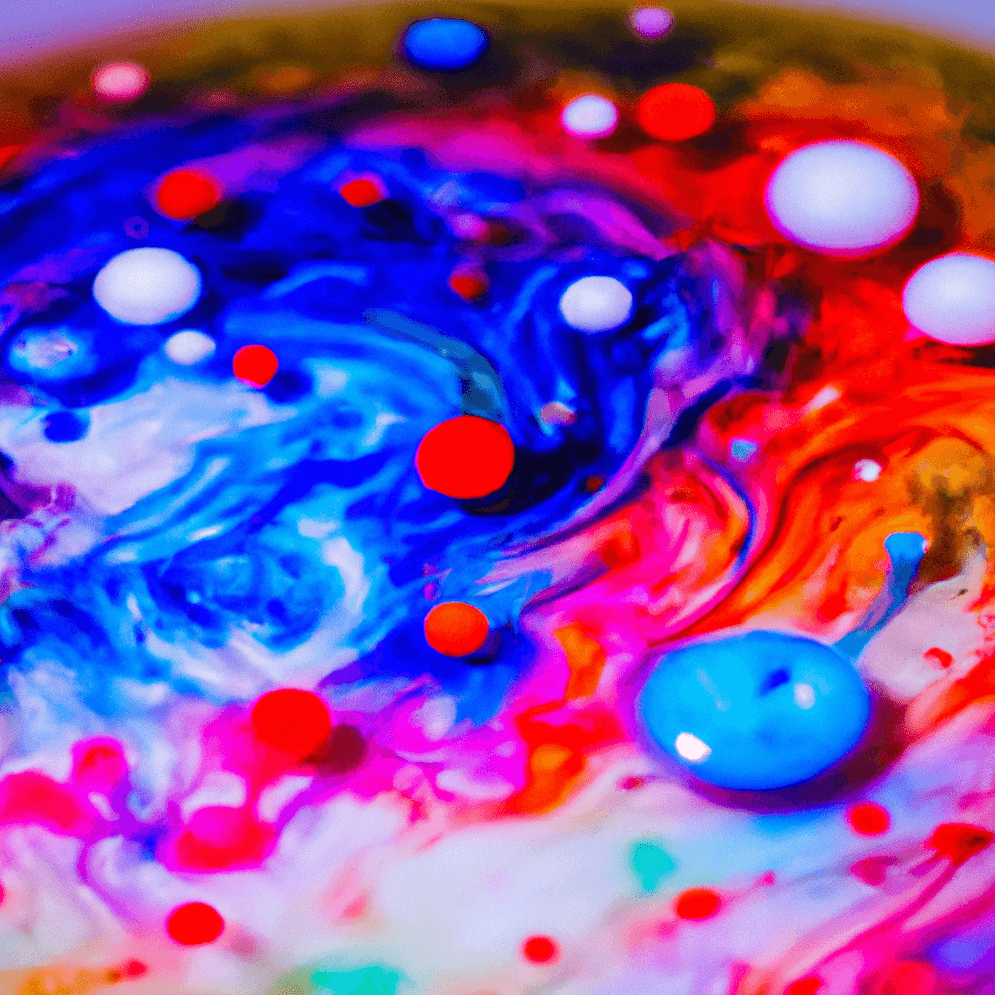
Touch a soap-dipped cotton swab to food coloring in milk and watch the colors burst apart into swirling patterns.
Easy
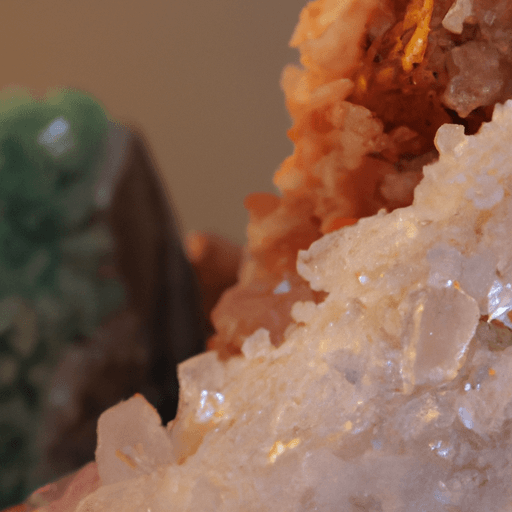
Pour a salt-and-bluing mixture over sponges and watch feathery crystals sprout within hours.
Easy
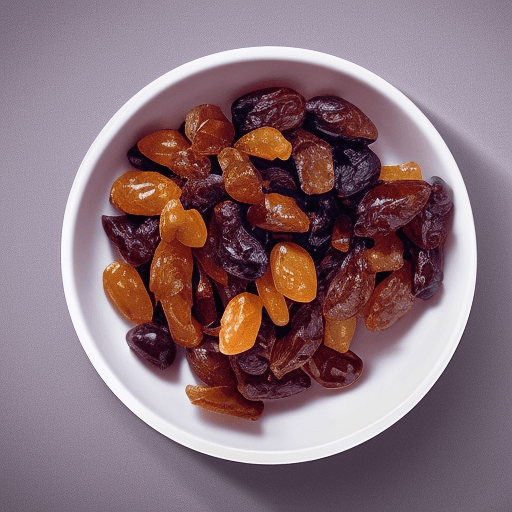
Drop raisins into soda water and watch them rise and sink as carbon dioxide bubbles cling to their wrinkled surface.
Easy
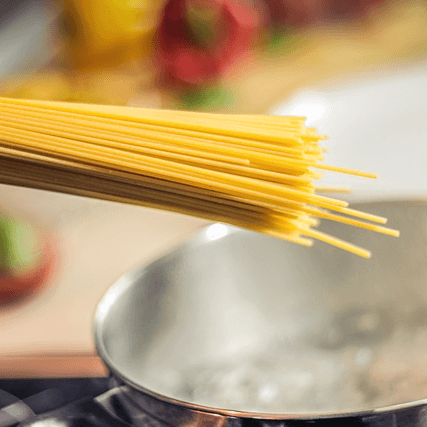
Watch spaghetti rise and sink on its own as carbon dioxide from baking soda and vinegar lifts each piece.
Share this page:


Page 1 of 6


Science Concepts
Acid ErosionAcid-Base ReactionsAnthocyaninsAtomic StructureBeer's LawBuoyancyCalcium Carbonate ReactionsCapillary ActionCarbon Dioxide Gas ProductionCatalysisChemical IndicatorsChemiluminescenceChromatographyColligative PropertiesCombustionConvectionCorrosionCrystal GrowthDensityDisplacement ReactionsDissolution and SolubilityElectrochemical CellsElectrolysisEvaporationExothermic ReactionsFreezing Point DepressionGas PressureHydrogen GasImmiscible LiquidsMetal Reactivity SeriesNeutralizationOsmosis and DehydrationOxidationpH IndicatorsPhase ChangesPhosphorescenceProtein DenaturationSaponificationSublimationSupersaturationSurface TensionSurfactantsTemperature Effects on Reaction RateUV AbsorptionVoltage and Electric Current