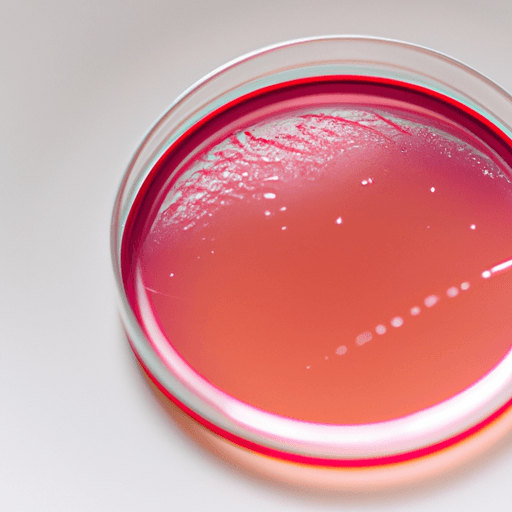
Does nicotine make cancer cells multiply faster? You expose human colorectal adenocarcinoma cells (colon cancer tissue) to three concentrations of nicotine solution. A set of untreated cells serves as the control.
After three days of incubation, you test each sample with a phosphatase assay kit. This colorimetric test reveals whether cells have multiplied. Every nicotine-treated sample shows cell growth, while the untreated control does not.
Hypothesis
The hypothesis is that the human colorectal adenocarcinoma cells will grow at a faster rate after being exposed to nicotine.
Growing living cells in a lab dish also gives scientists a way to test how substances affect cell growth. In one experiment, human colon cancer tissue is placed into well plates at different nicotine concentrations and incubated for three days. By controlling every other variable, this cell culture approach can reveal whether a chemical speeds up or slows down cell multiplication.
Cell proliferation is the process by which cells grow and divide. After three days of incubation, a phosphatase assay kit is used to determine whether cells have multiplied — detecting enzyme activity in the samples through a colorimetric reaction that produces a measurable color change.
Method & Materials
You will extract tissue samples from a tissue culture flask and place them in 12 well plates. You will then prepare nicotine solutions in three beakers and add them to the well plates. Finally, you will incubate the plates for three days and measure the rate of cell proliferation using a phosphatase assay kit.
You will need human colon colorectal adenocarcinoma tissue, a tissue culture flask, a phosphatase assay kit, well plates, nicotine, distilled water, a spatula, a digital weighing scale, three beakers, a measuring cylinder, and a pipette.
Eureka Crate — engineering & invention kits for ages 12+ — monthly projects that build real-world skills. (Affiliate link)
The results showed that the presence of nicotine encouraged cell proliferation, proving our hypothesis to be true. Despite the warnings about the dangers of smoking, most smokers still find it difficult to quit.
Why do this project?
This science project is interesting because it explores the effects of nicotine on cancer cells, which is an important topic in today's society.
Also Consider
This science project can also be repeated using other tissue, such as human prostrate carcinoma samples. Another variation is to expose the tissue to cigarette smoke.
Full project details
Additional information and source material for this project are available below.