

Soybean Peroxidase Purification and Activity
Hard
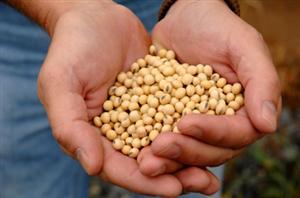
Can a purified enzyme work better than the version you buy off the shelf? Soybean peroxidase (an enzyme used in medical tests like AIDS diagnostics) often comes with impurities that lower its performance.
You purify commercial soybean peroxidase using chromatography (a method that separates molecules by charge). Then you remove salt with ultrafiltration and freeze-dry the protein overnight.
Finally, you compare the catalytic activity (how fast the enzyme drives a chemical reaction) of the purified version against the original. The purified peroxidase showed 60% higher activity than the commercial form.
Hypothesis
The hypothesis is that the soybean peroxidase can be purified by liquid chromatography.
Science Concepts Learned
Protein Purification
Protein purification means sorting through a mix to pull out one special protein you want to study. In this experiment, commercial soybean peroxidase — an enzyme used in medical tests like AIDS diagnostics — comes with impurities that lower its performance. Chromatography separates molecules by charge, isolating the target protein from that mix. The purified peroxidase showed 60% higher activity than the commercial form, proving that pulling out the one protein you want can dramatically improve how well it works.
Method & Materials
You will purify the soybean peroxidase using liquid chromatography and ultrafiltration.
You will need ethanesulfonic acid, sodium chloride, pyrogallol, hydrogen peroxide, potassium phosphate, soybean peroxidase, a BioCad Perfusion Sprint Chromatography system, an anion exchange polymer, a YM30 Amicon ultrafiltration disc, distilled water, and a Virtis Vacfreeze refrigerated condenser module.
Eureka Crate — engineering & invention kits for ages 12+ — monthly projects that build real-world skills. (Affiliate link)
See what’s includedResults
The results showed that the catalytic activity of the purified peroxidase was 60% higher compared to the unprocessed soybean peroxidase. This discovery is an important step in bringing medical assistance to the needy in poorer nations.
Why do this project?
This science project is interesting and unique because it uses soybean peroxidase, an enzyme that is more stable than horseradish peroxidase and can last up to a year without refrigeration.
Also Consider
Experiment variations to consider include testing different enzymes, such as horseradish peroxidase, and repeating the measurement at different pH solutions and different concentrations of salt.
Full project details
Additional information and source material for this project are available below.Related videos
These videos explain the science behind this project and demonstrate key concepts used in the experiment.
Share this Science Project:
Browse by Grade
Related Science Fair Project Ideas

Add liquid, powder, and solid enzymes to grease trap waste and track which form breaks down the fat, oil, and grease fastest.
Hard

Discover how four chemicals let fireflies glow and how scientists use that reaction to search for life on other planets.
Hard

Test how fast a protein breaks down at seven different pH levels by watching for color changes over time.
Hard
Share this Science Project: