

Hydroponics vs. Soil for Peperomia Root Growth
Medium
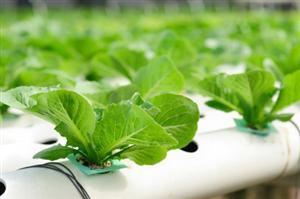
Do plant roots grow faster in water or in soil? Hydroponic growing replaces soil with a nutrient solution. The roots sit directly in liquid instead of pushing through dirt.
You cut ten stems from a Peperomia plant, each 8 cm long. Five go into containers of soil. Five go into containers of hydroponic nutrient solution. All ten sit in the same spot with equal sunlight. After three weeks, you pull each stem out and measure root length.
The hydroponic stems average 9.1 mm of root growth. The soil stems average 5.3 mm. Roots in the nutrient solution grow nearly twice as long in the same time.
Hypothesis
The hypothesis is that the Peperomia plant’s roots grow faster in hydroponics solution than in soil.
Method & Materials
You will cut 10 pieces of the Peperomia plant stem into 8 cm lengths, label 5 plastic containers “soil 1” to “soil 5” and 5 plastic containers “hydro 1” to “hydro 5”, make 3 holes at the bottom of the plastic containers marked “soil 1” to “soil 5”, fill these containers with soil, plant 1 Peperomia plant stem in each of the container, mix the hydroponics plant nutrient is with water according to the instructions stated on the packaging, pour the mixture into the plastic containers marked “hydro 1” to “hydro 5”, place 1 Peperomia plant stem in each of the container, and place the 10 plastic containers at a place where there is adequate sunlight.
You will need 1 Peperomia plant, 10 plastic containers, 5 plastic containers filled with soil, 1 bottle of hydroponic plant food, 1 pair of scissors, tap water, 1 ruler, and 1 black marker pen.
Tinker Crate — science & engineering build kits for ages 9–12 — real tools, real experiments, delivered monthly. (Affiliate link)
See what’s includedResults
After 3 weeks, the roots of the Peperomia plants in the hydroponics solution were longer, compared with the ones planted in soil.
Why do this project?
This science project is interesting because it shows how hydroponics can be used to grow plants in places with insufficient arable land, and how it can produce a higher crop yield and be carried out all year round.
Also Consider
Variations of this science project include using different types of plants and different types of nutrient solutions to see if they affect the rate of growth of the roots.
Full project details
Additional information and source material for this project are available below.Related videos
These videos explain the science behind this project and demonstrate key concepts used in the experiment.
Share this Science Project:
Related Science Fair Project Ideas
Sort soybean seeds by weight and test whether heavier or lighter seeds push through 10 centimeters of soil faster.
Medium
Plant pea seeds in 14 different soil samples and track which root diseases appear most often as the plants grow.
Medium
Clone a plant using leaf cuttings, stem cuttings, or layering and compare which method grows new roots first.
Medium
Share this Science Project: