

Altitude Living and Running Speed
Hard
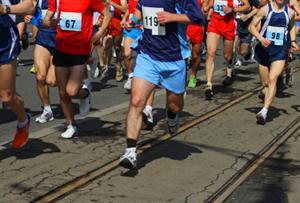
Does living at high altitude but training at sea level make you a faster runner? At higher elevations the air holds less oxygen. The body responds by producing more red blood cells to carry what oxygen is available.
You recruit 20 long-distance runners and time them on a 5 km cross-country route. Then you split them into two matched groups. One group lives at a hilltop residence but travels to sea level each day to train. The other group both lives and trains at sea level. Both groups follow the same training plan for 30 days.
After the month you re-run the 5 km race. You compare each group's average time to see whether the high-altitude living group gained a larger speed boost.
Hypothesis
The hypothesis is that living at high altitudes and training at lower altitudes can help to improve an athlete’s performance.
Method & Materials
You will need to enlist the help of 20 long-distance runners between ages 16 to 20 years, a 5 km cross country path, a stopwatch, a high altitude hill top residence rented for 1 month, a low altitude sea level residence rented for 1 month, daily transportation for the athletes, an athletics coach, and writing materials. You will divide the athletes into two groups and have them live and train at different altitudes for one month. After the month, you will have them run the same 5 km cross country route and compare their times.
You will need 20 long-distance runners between ages 16 to 20 years, a 5 km cross country path, a stopwatch, a high altitude hill top residence rented for 1 month, a low altitude sea level residence rented for 1 month, daily transportation for the athletes, an athletics coach, and writing materials.
Eureka Crate — engineering & invention kits for ages 12+ — monthly projects that build real-world skills. (Affiliate link)
See what’s includedResults
The results showed that the athletes who lived at the high altitude residence but trained at low altitude were able to better their performance significantly, over the period of 1 month, whilst the athletes who both lived and trained at low altitude managed to improve their performance only marginally.
Why do this project?
This science project is interesting because it explores the concept of living at high altitudes and training at lower altitudes to see if it can help athletes improve their performance.
Also Consider
Consider replicating high altitude living conditions using an Altitude Tent (such as the Colorado Altitude Training system). Alternatively, this experiment can also be done on other sports like swimming, cycling and triathlons.
Full project details
Additional information and source material for this project are available below.Related videos
These videos explain the science behind this project and demonstrate key concepts used in the experiment.
Share this Science Project:
Browse by Grade
Related Science Fair Project Ideas
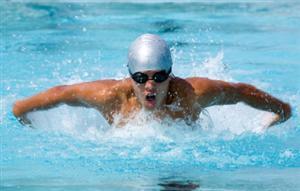
Time swimmers racing 100 meters with and without caps to find out whether a swimming cap actually makes a speed difference.
Hard

Have the same batters hit baseballs indoors and outdoors to find out whether the stadium type changes their distance.
Hard

Count how many times a tennis ball bounces in one minute on clay, grass, and asphalt to find the fastest court surface.
Hard
Share this Science Project: