

Bacteria Survival at Extreme Temperatures
Hard
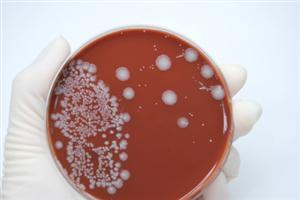
Can bacteria survive boiling water or dry ice? You expose three species -- E. coli, Streptococcus, and Bacillus -- to five temperatures. These range from -78 degrees Celsius (dry ice) up to 100 degrees Celsius (boiling).
Each sample sits at its assigned temperature for two hours. Then you transfer the bacteria to agar Petri dishes and wait five days.
Bacteria exposed to 60 and 100 degrees Celsius show no growth at all. Bacteria held at -78 and 0 degrees Celsius still grow normally.
Hypothesis
The hypothesis is that bacteria will be deactivated and destroyed at temperatures above 60 degrees Celsius.
Science Concepts Learned
Temperature and Bacterial Survival
Can bacteria survive boiling water or dry ice? Three species — E. coli, Streptococcus, and Bacillus — sit at five temperatures for two hours, ranging from -78°C (dry ice) up to 100°C (boiling). Then each sample transfers to agar Petri dishes and incubates for five days. Bacteria exposed to 60°C and 100°C show no growth at all. Those held at -78°C and 0°C, however, still grow normally — showing that high temperatures destroy bacteria completely while cold temperatures may not.
Method & Materials
You will divide the Petri dishes and test tubes into three groups, label them according to the species of bacteria, and place them in beakers with different temperatures. After two hours, you will swab the test tubes onto the Petri dishes and incubate them for five days.
You will need 15 agar Petri dishes, 15 disinfected swabs, a bottle of disinfected water, 15 test tubes and a rack, a measuring cylinder, 50 ml E Coil bacteria culture, 50 ml Streptococcus bacteria culture, 50 ml Bacillus bacteria culture, a marker pen, 5 beakers, 2 hot plates, 3 thermometers, a bag of ice, a bag of dry ice, and a clock.
Eureka Crate — engineering & invention kits for ages 12+ — monthly projects that build real-world skills. (Affiliate link)
See what’s includedResults
The results showed that the high temperatures of 60 degrees Celsius and 100 degrees Celsius destroyed the bacteria, while the lower temperatures of -78 degrees Celsius and 0 degrees Celsius were still within the optimal range of temperatures for bacteria growth. The control group, which was left at room temperature, showed significant growth.
Why do this project?
This science project is interesting because it explores how temperature affects the growth of bacteria, which is an important factor in understanding how bacteria can spread diseases and cause people to become ill.
Also Consider
Variations of this project could include repeating the experiment with different temperatures and species of bacteria, such as Staphylococcus or Campylobacter.
Full project details
Additional information and source material for this project are available below.Related videos
These videos explain the science behind this project and demonstrate key concepts used in the experiment.
Share this Science Project:
Browse by Grade
Related Science Fair Project Ideas

Grow bacteria from four differently washed chopsticks on blood agar and find out how long antibacterial soap really needs to work.
Hard
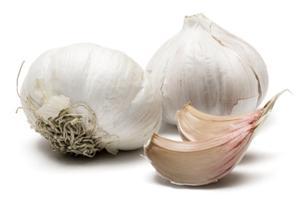
Add garlic extract to E. coli in a petri dish and track whether the bacteria can grow at all over five days.
Hard

Open three types of baby food, leave them out for different lengths of time, and measure which one grows the most bacteria.
Hard
Share this Science Project: