

Acid, Alkali, and Bacteria Growth Inhibition
Hard
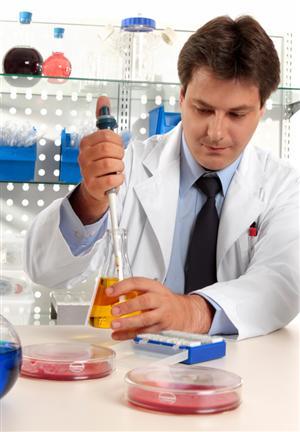
Does acid or alkali stop bacteria from growing, and does the strength of the solution matter? You soak filter paper discs in hydrochloric acid or sodium hydroxide at four concentrations: 5%, 10%, 15%, and 20%.
You place the soaked discs onto Petri dishes coated with E. coli bacteria. After three days, you measure the inhibition zone (the clear ring with no bacterial growth) around each disc.
Higher concentrations create larger clear zones. Acid produces bigger inhibition zones than alkali at every concentration.
Hypothesis
The hypothesis is that a higher concentration of acidic and alkaline solutions will result in a larger inhibition zone.
Science Concepts Learned
pH and Bacterial Growth
Not all pH extremes stop germs equally. When filter paper discs soaked in hydrochloric acid or sodium hydroxide — at concentrations from 5% to 20% — are placed on Petri dishes coated with E. coli, the inhibition zones tell a clear story: acid produces bigger clear rings than alkali at every concentration tested. As concentration rises, the zones grow larger. That means strong acids are more effective than strong bases at halting bacterial growth, and the strength of the solution matters as much as whether it is acidic or alkaline.
Method & Materials
You will label eight Petri dishes with different concentrations of acid and alkaline solutions, prepare different concentrations of solutions in test tubes, cut filter paper discs, and place the discs in the Petri dishes. You will then observe the Petri dishes after three days.
You will need 8 agar Petri dishes, 8 disinfected swabs, 1 bottle of disinfected water, 1 filter paper, 1 hole puncher, 9 test tubes and a rack, 1 measuring cylinder, 1 bottle of hydrochloric acid, 1 bottle of Sodium hydroxide, E. coli. bacteria culture, a pair of forceps, 1 marker pen, and a pair of gloves.
Eureka Crate — engineering & invention kits for ages 12+ — monthly projects that build real-world skills. (Affiliate link)
See what’s includedResults
The results showed that higher concentrations of acidic and alkaline solutions resulted in a larger inhibition zone. Acidic solutions were also proven to be more effective than alkaline solutions in eliminating bacteria, as shown by the larger inhibition zone in the Petri dishes that were treated with acid.
Why do this project?
This science project is interesting because it explores how different concentrations of acid and alkaline solutions affect the growth of bacteria. It also shows how acidic solutions are more effective than alkaline solutions in eliminating bacteria.
Also Consider
Consider repeating this science project using other types of acids such as sulfuric acid or alkali such as calcium carbonate. You could also repeat the experiment using other species of bacteria such as the Cocci, Spirilla or Vibro.
Full project details
Additional information and source material for this project are available below.Related videos
These videos explain the science behind this project and demonstrate key concepts used in the experiment.
Share this Science Project:
Browse by Grade
Related Science Fair Project Ideas

Grow bacteria from four differently washed chopsticks on blood agar and find out how long antibacterial soap really needs to work.
Hard
Add garlic extract to E. coli in a petri dish and track whether the bacteria can grow at all over five days.
Hard

Open three types of baby food, leave them out for different lengths of time, and measure which one grows the most bacteria.
Hard
Share this Science Project: