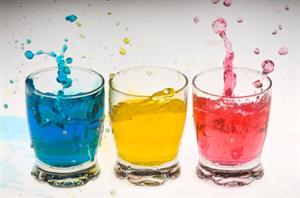
Can the color of a drink trick you into tasting a flavor that is not there? You mix identical batches of soda water and lime juice. Then you add red food dye to one batch, orange to another, and purple to a third. The fourth stays clear.
Twenty participants taste all four drinks and write down the flavor they detect. Most match the color to an expected flavor. The red drink is called strawberry, the orange one is called orange, and the purple one is called grape.
Hypothesis
The hypothesis is that most people’s perception of taste will be based on the color of the beverage.
What you believe will happen can change what you actually see, feel, or do. Adding red, orange, and purple food dye to identical drinks changes what people report tasting. The red drink is called strawberry and the purple one is called grape, even though every batch has the same lime juice.
Color can change how people feel about what they taste. In this experiment, identical batches of lime-flavored soda water are dyed red, orange, and purple, while a fourth batch stays clear. Twenty participants taste all four drinks and write down the flavor they detect. Most match the color to an expected flavor — calling the red drink strawberry, the orange one orange, and the purple one grape. Every drink tastes the same, but color alone is enough to shift perception.
The brain does not rely on taste alone to decide what flavor something is — sight plays a powerful role too. Twenty participants drink four identical batches of soda water and lime juice dyed different colors, then write down the flavor they detect. Most match the color to an expected flavor: they call the red drink strawberry and the purple one grape, even though every cup contains the same liquid. That shift in reported flavor shows how the brain blends what the eyes see with what the mouth tastes to create flavor.
Method & Materials
You will need to gather all the materials, then mix equal amounts of soda water and lime juice and the same servings of sugar into all 4 jugs. A few drops of red food coloring is added to the first jug until a tempting red color is obtained. Orange food coloring is added to the second jug and purple food coloring is added to the third jug. The fourth jug will remain clear without any coloring. The jugs are kept in a refrigerator overnight. On the second day of the experiment, the 4 jugs of beverage are brought out of the refrigerator for testing. Each type of drink is poured into 20 paper cups. The 20 participants are each given 4 cups containing the different colored drinks and a form to fill in their choice.
You will need 20 participants, 80 plastic cups, 3 types of food coloring, 4 jugs, 1 kg sugar, 4 bottles of lime juice, 4 bottles of soda water, 1 refrigerator, 20 forms to fill, and 1 black marker pen.
Eureka Crate — engineering & invention kits for ages 12+ — monthly projects that build real-world skills. (Affiliate link)
The results show that most of the participants had selected the flavors of the drinks based on the color. This proves that the hypothesis is true - most people’s perception of taste will be based on the color of the beverage.
Why do this project?
This science project is interesting because it shows how our past experiences and what we have seen in advertisements can influence our perception of taste.
Also Consider
Possible variations for this project include testing various juices (apple, grape, pear) versus adding the same food coloring dye in them, or using a clear flavored jello with red and yellow food coloring (see video below)
Full project details
Additional information and source material for this project are available below.
These videos explain the science behind this project and demonstrate key concepts used in the experiment.
In this science project video created by a student, we witness a creative variation of our experiment featuring red and yellow colored clear berry jello. It's captivating to observe her as she collects ratings on the jello's sweetness, sourness, and flavor, revealing fascinating insights into participants' taste preferences. Are you ready to discover the outcome?