Voltage and Electrolysis Speed
Hypothesis
Science Concepts Learned
Electrolysis uses electricity to break water apart, and more batteries mean faster results. More voltage pushes more current through the solution, so the hydrogen gas collects faster each time you add another battery.
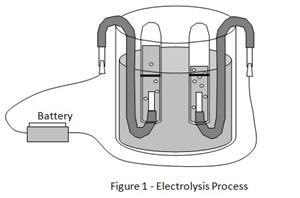
Running electricity through salt water splits the water apart, and the hydrogen gas that forms is visible as bubbles collecting on the copper electrodes. Two copper wires sit in a beaker of salt water and connect to batteries. As current flows, hydrogen gas rises into an inverted test tube placed over one wire. More voltage pushes more current through the solution, so the gas collects faster each time you add another battery.
Method & Materials
MEL Chemistry — hands-on chemistry experiment kits delivered monthly — great for building lab skills at home. (Affiliate link)
See what’s includedResults
Why do this project?
Also Consider
Full project details
Additional information and source material for this project are available below.Related videos
Related Science Fair Project Ideas