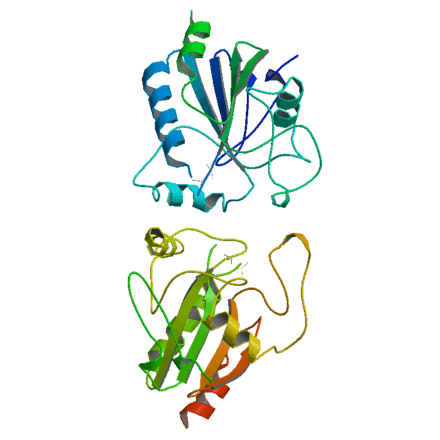
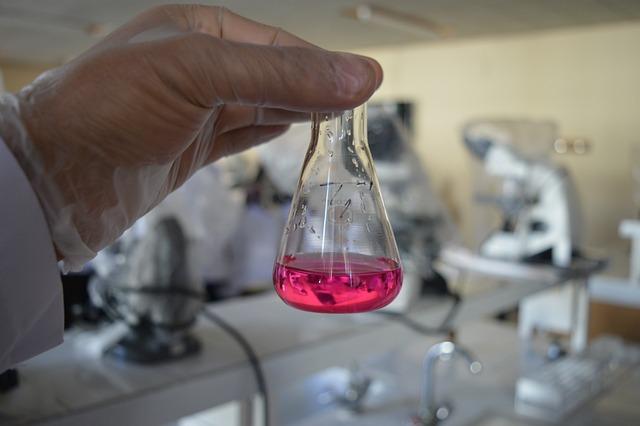
What happens to the enzyme peroxidase when you heat it past its comfort zone? Peroxidase is a protein in potatoes that breaks down hydrogen peroxide. When it works, it releases oxygen bubbles you can count.
You place small potato cubes and hydrogen peroxide at eight temperatures from 15 to 85 degrees Celsius. After the potato enters the test tube, you count the bubbles produced in 20 seconds.
Bubbles appear at temperatures up to 55 degrees. Above 65 degrees, no bubbles form at all. The enzyme stops working because the heat changes its shape permanently.
Hypothesis
The hypothesis is that the peroxidase enzyme will become ineffective as a catalyst at high temperatures.
Hydrogen peroxide decomposition produces oxygen gas as a visible sign that the reaction is happening. In one experiment, potato cubes placed in hydrogen peroxide release bubbles you can count. Above 65 degrees Celsius, no bubbles form at all, showing the decomposition of hydrogen peroxide into water and oxygen gas has stopped.
Reaction rate — how fast a chemical change happens — depends on the enzyme keeping its shape. Peroxidase in potatoes breaks down hydrogen peroxide, releasing oxygen bubbles you can count. Bubbles appear at temperatures up to 55 degrees Celsius. Above 65 degrees, no bubbles form at all because the heat has permanently altered the enzyme's shape, halting the reaction entirely.
Once heat changes an enzyme's shape, the damage is permanent and the enzyme never recovers. Peroxidase in potatoes breaks down hydrogen peroxide and releases oxygen bubbles you can count. Bubbles appear at temperatures up to 55 degrees, but above 65 degrees no bubbles form at all — chemicals or heat change the enzyme's shape so it stops working, and that change cannot be reversed.
When heat pushes an enzyme past its limit, the damage is permanent. Peroxidase in potatoes releases oxygen bubbles as it breaks down hydrogen peroxide at temperatures up to 55 degrees. Above 65 degrees, no bubbles form at all because the heat changes the enzyme's shape permanently, and it can never work again.
Method & Materials
You will cut a potato into small cubes, mark 8 beakers and test tubes, fill the beakers with water and adjust the temperature, add hydrogen peroxide to the test tubes, put the potato cubes into the beakers, and measure the number of bubbles formed in the test tubes.
You will need a potato, 7 beakers, 7 test tubes, a hot plate, a packet of ice, a bottle of hydrogen peroxide, a stopwatch, a thermometer, and a marker pen.
Eureka Crate — engineering & invention kits for ages 12+ — monthly projects that build real-world skills. (Affiliate link)
The experiment showed that bubbles were formed in test tubes 1 to 5, but no bubbles were formed in test tubes 6, 7, and 8. This proves that the hypothesis is true, and that the enzyme peroxidase becomes ineffective as a catalyst at high temperatures.
Why do this project?
This science project is interesting because it explores how temperature affects the peroxidase enzyme, which is an important enzyme found in almost all living organisms. It helps to convert hydrogen peroxide into water and oxygen, which is essential for cell health.
Also Consider
Variations of this experiment could include using different amounts of hydrogen peroxide in the test tubes, or using animal liver tissue instead of potato.
Full project details
Additional information and source material for this project are available below.