

Body Temperature Across Three Thermometer Types
Medium
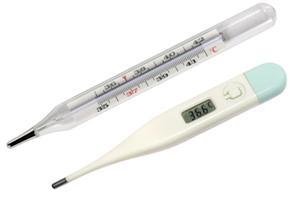
Do all thermometers give the same reading for the same body part? You compare three types:
- mercury glass
- digital thermocouple
- infrared
First you measure water held at 37 degrees Celsius with all three devices. Then you take readings from three spots on one person's body.
You discover whether the thermometer type changes the result. You also find out which body location reads the highest temperature.
Hypothesis
The hypothesis is that readings using different types of thermometers will be the same but different readings will be obtained from different parts of the body.
Science Concepts Learned
Temperature Measurement
Temperature measurement tools each use a different method to find out how hot or cold something is. A mercury glass thermometer, a digital thermocouple, and an infrared device can all read the same water held at 37 degrees Celsius. Yet these three tools may give different readings on the same body part, showing that the choice of tool affects the result.
Method & Materials
You will measure the temperature of water and different parts of the body using three different thermometers.
You will need a participant, a glass mercury thermometer, a digital thermocouple thermometer, an infrared thermometer, a hot plate, a beaker, and tap water.
MEL Physics — hands-on physics experiment kits delivered monthly — real experiments, not just reading. (Affiliate link)
See what’s includedResults
The results showed that readings taken with all three types of thermometers were the same. The temperature taken inside the mouth was higher than the armpit's but lower than the temperature taken inside the ear.
Why do this project?
This science project is interesting because it shows how different thermometers measure body temperature in different parts of the body.
Also Consider
To improve the reliability and accuracy of the results, a larger sample of participants should be used. This science fair project may also be repeated at different times of the day to compare the body temperature changes.
Full project details
Additional information and source material for this project are available below.Related videos
These videos explain the science behind this project and demonstrate key concepts used in the experiment.
Share this Science Project:
Related Science Fair Project Ideas
Drop food coloring into three jars of different temperature water and watch the color spread at wildly different speeds.
Medium
Burn equal pieces of oak, maple, cedar, and pine under water to discover which wood type produces the most heat.
Medium

Compare water in a wide plate versus a narrow glass, sun versus shade, and fan versus still air to see what speeds up evaporation.
Medium
Share this Science Project: