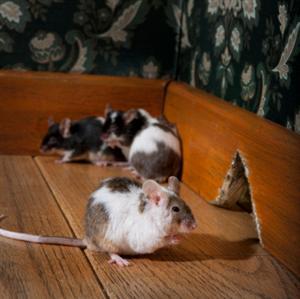
What color fur will baby mice have when you cross black and white parents? Coat color follows patterns of genetic dominance (where one gene version overrides another). This project breeds mice in four color combinations.
You set up four boxes. Each box pairs one male with three females in a different color combination. After about four weeks the babies are born. You wait seven days for their fur to grow in. Then you record each pup's color.
The results show which pairings produce only one fur color and which produce a surprising mix.
Hypothesis
The hypothesis is that the white mouse has the dominant gene.
Coat color in mice follows patterns of genetic dominance — one gene version overrides another, and the hidden version stays silent. You breed mice in four color combinations, pairing black and white parents in different arrangements. Some pairings produce only one fur color, while others yield a surprising mix, revealing which color trait is dominant.
Paired genes follow rules of dominance, where one version can override another to determine a trait like coat color. Crossing black and white mice reveals these rules in action. Some pairings produce only one fur color because the dominant gene masks the recessive one. Other pairings produce a surprising mix — showing that both parents carried a hidden recessive gene all along.
When parents carry different versions of the same gene, heredity determines which version their offspring actually display. Coat color in mice follows clear patterns of genetic dominance, where one gene version overrides the other. Crossing black and white parent mice reveals whether a single fur color appears in all the pups — or whether a surprising mix of colors emerges in the next generation.
Method & Materials
You will breed two male black mice and two male white mice with six female black mice and six female white mice. You will observe the color of the newborn mice after 7 days.
You will need two male black mice (30-60 days of age), two male white mice (30-60 days of age), six female black mice (30-60 days of age), six female white mice (30-60 days of age), four cages or wooden boxes for the mice, one bag of food, and newspaper.
Eureka Crate — engineering & invention kits for ages 12+ — monthly projects that build real-world skills. (Affiliate link)
The results showed that white male and female mice only produced white colored baby mice. The participation of black color mice, either male or female, resulted in the birth of other mice of other colors, including black, brown, black-white and white mice.
Why do this project?
This science project is interesting and unique because it shows how different colors of mice can be bred and the results observed.
Also Consider
Experiment variations to consider include breeding mice of different color coats and breeding and comparing the eye color of the mice.
Full project details
Additional information and source material for this project are available below.