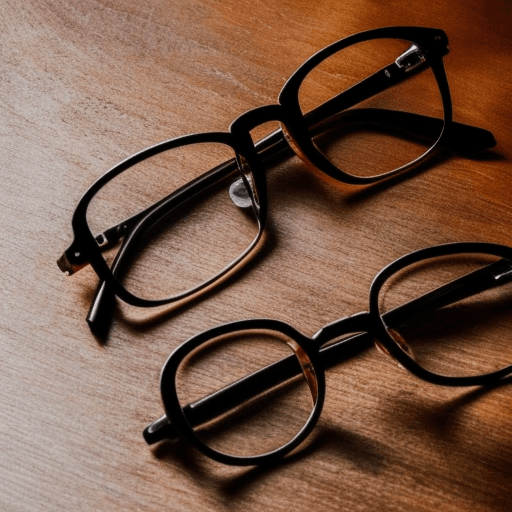
How do eyeglasses bend light so that blurry things look sharp? Your eyes work like tiny cameras. A lens inside each eye focuses light onto the retina (RET-in-ah) at the back of the eyeball. If the eyeball is too long or too short the light lands in the wrong spot.
You borrow a few different pairs of glasses and hold each one at arm's length. Look through them at a distant object. Nearsighted lenses make the view look smaller. Farsighted lenses make it look bigger or even upside down.
Each lens bends light a different way to fix a different problem. Glasses for astigmatism (ah-STIG-ma-tis-m) stretch and twist the view because the cornea is an unusual shape.
Hypothesis
The hypothesis is that eyeglasses help us see better by bending light beams so that they meet right at the back of our eyeballs on the retina.
Light bends when it moves from air into glass, and eyeglass lenses use that bending to fix vision problems. Hold a nearsighted lens at arm's length and the view looks smaller. Hold a farsighted lens the same way and it looks bigger, or even upside down. Each lens bends light a different way to fix a different problem.
Hold a pair of glasses at arm's length and look through them at a distant object. Nearsighted lenses make the view look smaller. Farsighted lenses make it look bigger or even upside down. Each lens bends light a different way to fix a different problem. Glasses for astigmatism stretch and twist the view because they correct a cornea that is an unusual shape.
Method & Materials
You will hold a pair of glasses out at the end of your arm, look at the view, and look at the lenses. You will also look at several different pairs.
You will need a few friends who wear glasses (perhaps your classmates at school).
Through this experiment, you will learn that glasses for nearsighted people make the view look smaller, glasses for farsighted people make the view look bigger or even upside down, and glasses for people with astigmatism change the shape of the view, stretching it out and maybe twisting it. You will also observe that nearsighted people can see near, but not far away, and farsighted people can see far, but not close up.
Why do this project?
This science project is interesting and unique because it allows you to observe the differences between different types of glasses and how they help people with different vision problems.
Also Consider
Experiment variations to consider include testing different types of lenses and observing how they affect vision, or testing different types of frames and observing how they affect vision.
Full project details
Additional information and source material for this project are available below.