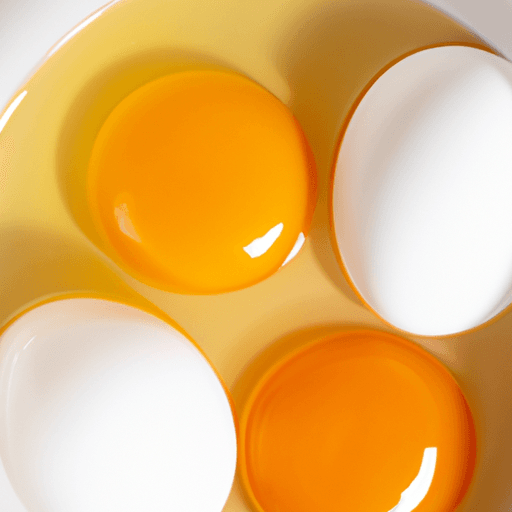
Do substances pass through a cell membrane on their own? A raw egg soaked in vinegar loses its hard shell. What remains acts like a large animal cell with a flexible membrane.
You place three shell-free eggs into three different liquids. One gets distilled water. One gets sugar solution. One gets salt solution. You measure and weigh each egg before and after soaking for 24 to 48 hours.
Some eggs swell. Others shrink. The changes show osmosis (the movement of water across a membrane) and diffusion (the spreading of dissolved substances) in action.
Hypothesis
The hypothesis is that different solutions will affect an animal cell and substances will pass through the cell membrane.
A cell membrane is a thin, flexible barrier that controls which substances enter or leave a cell. When you soak a shell-free egg in different liquids, the membrane lets water through while blocking larger molecules. Depending on the liquid, some eggs swell and others shrink — showing how the membrane selects what passes.
A concentration gradient means one side of a membrane has more dissolved material than the other. In this experiment, you place eggs in three liquids: distilled water, a sugar solution, and a salt solution. Each liquid contains a different amount of dissolved substance, so each creates a different gradient across the egg membrane. That difference determines what happens next — some eggs swell, and others shrink.
The egg membrane is semipermeable, meaning it allows water molecules to pass through while blocking larger molecules. When you place eggs in different liquids, they swell or shrink depending on how water moves across that membrane.
Method & Materials
You will make different solutions to test three egg cells, pour the solutions over the eggs in jars, and observe changes over 1 to 2 days.
You will need 3 raw eggs, 3 clean jars with lids, 3 liquids for testing, measuring tape, kitchen scale (optional), and paper towels.
Eureka Crate — engineering & invention kits for ages 12+ — monthly projects that build real-world skills. (Affiliate link)
The experiment showed that different solutions do affect an animal cell and substances do pass through the cell membrane. The most interesting observation was that the eggs changed size when placed in the different solutions.
Why do this project?
This science project is interesting and unique because it allows students to observe the effects of different solutions on an animal cell and to see if substances pass through the cell membrane.
Also Consider
Experiment variations to consider include testing different concentrations of sugar solutions and testing different types of solutions.
Full project details
Additional information and source material for this project are available below.