What happens when a solid skips the liquid stage and turns straight into gas? Dry ice is frozen carbon dioxide. At normal air pressure, it does not melt. Instead it sublimates (changes directly from solid to gas). One pound of dry ice produces about 250 liters of gas.
Try several experiments with this property:
- Drop a pellet into a balloon and tie it shut. The balloon inflates as the dry ice becomes gas.
- Place a piece in a film canister and snap the lid on. The pressure builds until the cap pops off.
- Press a warm spoon against a chunk. The spoon vibrates and produces a singing sound as gas pushes it away and contact resumes rapidly.
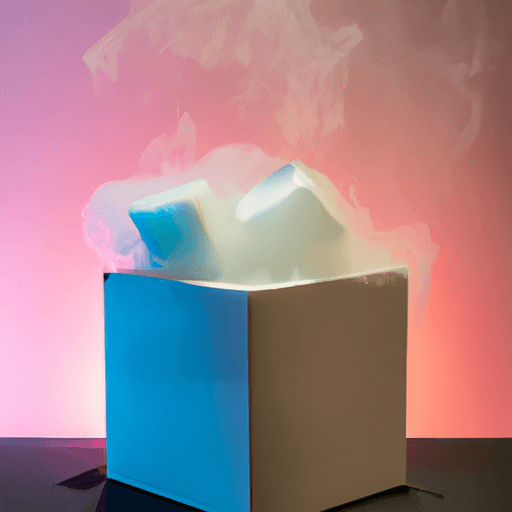
- Drop dry ice into warm water to create dense white fog. The cold CO2 gas condenses water vapor into visible clouds.
Hypothesis
The hypothesis is that dry ice can be used to create a variety of fun and interesting experiments.
Trapped gas pushes against whatever holds it in. Dry ice is frozen carbon dioxide that does not melt at normal air pressure — instead it sublimates, changing directly from solid to gas. Drop a pellet into a balloon and tie it shut. As the dry ice becomes gas, it pushes outward against the rubber walls and the balloon inflates.
Some solids skip the liquid stage entirely. Dry ice is frozen carbon dioxide, and at normal air pressure it does not melt — instead it sublimates, changing directly from solid to gas. Press a warm spoon against a chunk and the gas pushes the spoon away, then contact resumes rapidly. That rapid push-and-return produces a singing sound, letting you hear this phase change happening in real time.
When a solid changes directly into a gas, the gas needs far more space than the solid did. Frozen carbon dioxide sublimates, meaning it changes directly from solid to gas. You can trap this gas inside a balloon tied around dry ice and watch it inflate as the solid vanishes.
Method & Materials
Wear protective glasses and thick gloves when handling the dry ice. You will use dry ice to make a film can pop, inflate a balloon, create fog, and make a spoon sing.
You will need dry ice, a plastic 35mm film container, a balloon, a spoon, and a push pin or straight pin.
MEL Chemistry — hands-on chemistry experiment kits delivered monthly — great for building lab skills at home. (Affiliate link)
These experiments demonstrate the sublimation process of dry ice and can be used to teach about the properties of carbon dioxide. One of the most interesting observations is that the balloon will sink at first, but then rise to the surface as it begins to inflate.
Why do this project?
This science project is unique because it uses dry ice to create a variety of fun and interesting experiments.
Also Consider
Experiment variations to consider include using a different container for the film can experiment, such as a soda bottle, and using a different type of balloon for the balloon experiment, such as a mylar balloon.
Full project details
Additional information and source material for this project are available below.