Science Fair Projects Ideas

All Science Fair Projects

Over 500 FREE Science Fair Project Ideas!

  Search    Browse    Forum  Coach    Links    Editor    Help    Tell-a-Friend    Encyclopedia    Dictionary     
 
Top 20 Science Project Searches
Science Fair Coach
What do science fair judges look out for?
Topics  > Physics  > Astronomy
Hide project details  | Sort by titleSort by difficulty Bookmark this page
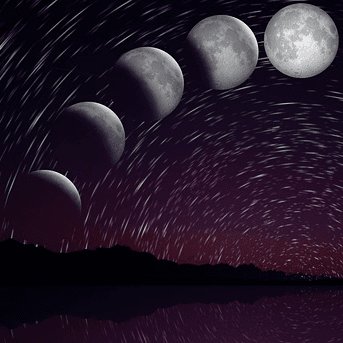
Describe the different phases of the moon and explain what causes them
Describe the different phases of the moon and explain what causes them.
Difficulty: Elementary school
Explain how the tilt of the earth works
Demonstrate that seasons exist because of the tilt of the earth and its impact on the intensity of the sunlight at a given location.
Difficulty: Elementary school
How to build a homemade magnetometer to study how the earth's magnetic fields are affected by solar storms
Solar storms can affect the Earth's magnetic field causing small changes in its direction at the surface which are called 'magnetic storms'. A magnetometer operates like a sensitive compass and senses these slight changes. The soda bottle magnetometer is a simple device that can be built for under $5.00 which will let students monitor these changes in the magnetic field that occur inside the class
Difficulty: High school
How to build a sidereal pointer to help us to locate the position of a celestial body
In this article, we talk about the construction of a sidereal pointer. It is an instrument that allows you to localize each celestial object in the night sky, just knowing its coordinates.
Difficulty: Elementary school
How to calculate the distance of the sun and the moon from earth, by understanding eclipses
Hipparchus, who used an eclipse of the Moon to deduce the precession of the equinoxes (here), used a total eclipse of the Sun--probably in 129 BC--to estimate how far the Moon was. That distance had also been derived from a lunar eclipse by Aristachus--see here.
Difficulty: High school
How to make your own comet
In ancient times, people did not understand the objects in the sky, how they moved or what they were. They did not know what a comet was, where it came from, or where it went. A large comet is a spectacular sight and inspired both awe and fear in primitive peoples.
Difficulty: Elementary school
How to make your own sundial
Sundials are the oldest way to tell time. The position of the sun changes during the day. The sun doesn't move; the Earth rotates around the sun, making it seem like the sun rises in the east and sets in the west. As the sun goes across the sky, the post in the center of the sundial casts a shadow on a circular plate. Marks on the plate tell you what time it is. It's just like reading a clock!
Difficulty: Elementary school
How to measure the diameter of the sun
The earth is approximately 150,000,000 km from the sun. This distance varies somewhat with the seasons because of Earth's elliptical orbit. Yet, a simple instrument can be constructed which will provide measurement data that permits a relatively accurate measurement of the sun's diameter.
Difficulty: Elementary school
Is it possible to collect micrometeorites from the outdoors?
Collect micrometeorites from indoor and outdoor sources.
Difficulty: Elementary school
Understanding and identifying black holes
Physicists have predicted that at the Big Bang, black holes with sizes from 10^-5 grams up to perhaps solar mass size might have been formed. Use the above formulae to predict the mass range of the black holes would have lasted as long as the present age of the universe, between 9 billion to 15 billion years, and which should just now be evaporating completely away. Predict what the final few thou
Difficulty: High school
 Page 1 of 2  Bookmark this page


Science kits, science lessons, science toys, maths toys, hobby kits, science games and books - these are some of many products that can help give your kid an edge in their science fair projects, and develop a tremendous interest in the study of science. When shopping for a science kit or other supplies, make sure that you carefully review the features and quality of the products. Compare prices by going to several online stores. Read product reviews online or refer to magazines.

Copyright (C) 2009 All Science Fair Projects.com All Rights Reserved. Site
All Science Fair Projects Homepage
Search | Browse | Links | Handbook | From-our-Editor | Books | Help | Contact | Privacy | Disclaimer| Copyright notice