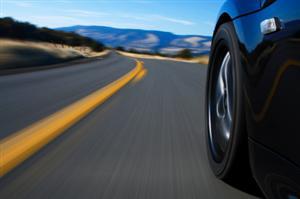
Does low tire pressure really waste gas? You test five different cars at two tire pressure levels. Each car drives at 50 miles per hour on 5 gallons of fuel. The first run uses 100 percent of the recommended tire pressure. The second run uses only 80 percent.
You record how far each car travels before the fuel runs out. Cars with properly inflated tires go about 2 to 4 percent farther than those with low pressure.
Hypothesis
The hypothesis is that using the recommended tire pressure will provide better gasoline mileage.
Lower tire pressure increases rolling resistance, the force that slows a rolling wheel. Cars with low pressure travel a shorter distance on the same amount of fuel. Properly inflated tires reduce rolling resistance, so those cars go about 2 to 4 percent farther.
Does low tire pressure really waste gas? This project tests five different cars at two tire pressure levels — each driven at 50 miles per hour on 5 gallons of fuel. The first run uses the recommended tire pressure; the second drops to 80 percent of that value. When tires are properly inflated, cars travel 2 to 4 percent farther on the same fuel before the low fuel signal lights up.
You test five different car models at two levels: 100 percent of the recommended pressure, then 80 percent. Each car drives at a constant 50 miles per hour on 5 gallons of fuel. When the low fuel signal lights up, you record the odometer reading. Cars with properly inflated tires travel about 2 to 4 percent farther on the same amount of fuel.
Method & Materials
You will use five cars of different models, five containers of gasoline, five tire pressure gauges, and five experienced drivers. You will adjust the tire pressure of each car to its recommended value and then drive the cars at a constant speed of 50 miles per hour until the "Low Fuel" signal lights up. You will then record the odometer readings and adjust the tire pressure to 80% of the recommended value.
You will need five cars of different models, five containers of gasoline, five tire pressure gauges, and five experienced drivers.
Eureka Crate — engineering & invention kits for ages 12+ — monthly projects that build real-world skills. (Affiliate link)
The results of the experiment showed that the cars were able to travel about 2% to 4% further when the tire pressures were set at the recommended value compared to when the tires were set at 80% of the recommended value.
Why do this project?
This science project is interesting because it shows how a small change in tire pressure can make a big difference in the gas mileage of a car.
Also Consider
To further explore this science project, consider repeating the experiment using cars with different engine capacities, gasoline with different octane ratings, and different tires. You could also try the experiment on different types of road surfaces to see if that affects the fuel efficiency of the car.
Full project details
Additional information and source material for this project are available below.