

Parallax: Tangent vs. Radian Methods
Medium

Can you measure the distance to an object using only angles and a baseline? Parallax is a technique that calculates how far away something is by viewing it from two different positions. Astronomers use it for distant stars. You can test it across a room.
You set up a target about 20 feet from a wall. You mark two viewing points on the wall and measure the angle between them with a protractor and string. Then you calculate the distance using two different methods: the tangent method and the radian method.
Both methods give accurate results at this scale. Neither one proves clearly better than the other for short distances.
Hypothesis
The hypothesis is that the tangent method will be more accurate than the radian method.
Science Concepts Learned
Parallax
Once you see the shift, you can use it to figure out how far away something is. This project does exactly that. You view a target from two spots on a wall, measure the angle of the shift, and then calculate the distance.
Method & Materials
You will measure the distance between two points by using a protractor, a string, and a yardstick. You'll use the tangent and radian methods to measure the distance.
You will need a large room, a blackboard, a yardstick, a protractor, and a string.
MEL Math — hands-on math experiment kits delivered monthly — makes abstract concepts tangible. (Affiliate link)
See what’s includedResults
The results showed that parallax is an accurate way to measure distances. However, there was no significant difference in the accuracy of the two methods.
Why do this project?
This science project is interesting because it demonstrates how parallax works in measuring distances on a small scale.
Also Consider
Experiment variations to consider include measuring distances with different angles and using different objects as the target.
Full project details
Additional information and source material for this project are available below.Share this Science Project:
Browse by Grade
Related Science Fair Project Ideas
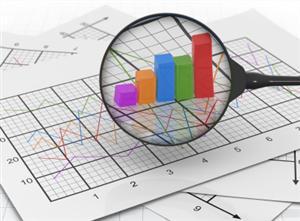
Drop a pencil in front of 100 to 500 people, record which hand catches it, and see if bigger groups give steadier results.
Medium
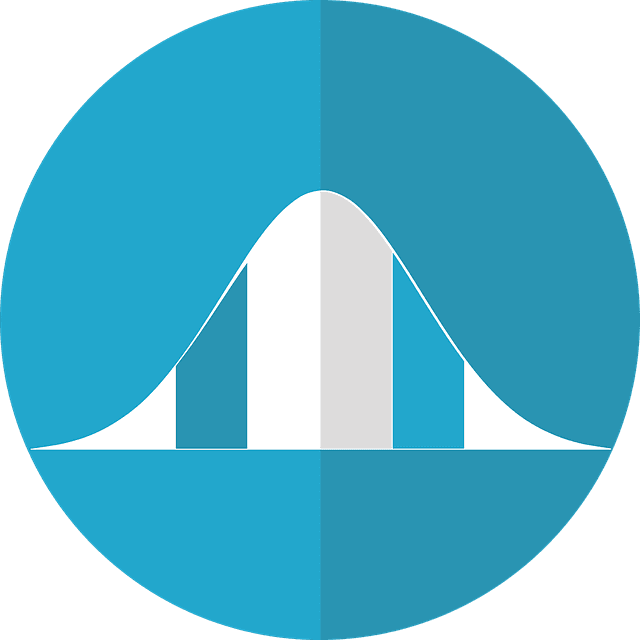
Drop 200 marbles through a pegboard and watch them sort themselves into a near-perfect bell curve every single time.
Medium

Run the same equation at different rounding levels in a spreadsheet and watch a stable pattern tip into mathematical chaos.
Medium
Share this Science Project: