

Soccer Ball Bounce on Different Turf
Medium
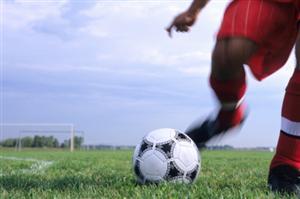
Does the type of grass on a soccer field change how a ball bounces? Different turf surfaces absorb energy in different ways. Some let the ball spring back up. Others cushion the impact and kill the bounce.
You drop a soccer ball from two meters onto three surfaces: Kentucky bluegrass, Bermuda grass, and artificial turf. Each drop is repeated ten times. You count the number of bounces each time and find the average.
The results show a clear difference. Artificial turf produces the most bounces, while natural grass absorbs more energy from each impact.
Hypothesis
The hypothesis is that a soccer ball will bounce the most number of times on artificial turf.
Method & Materials
You will select three locations with different types of turf, measure the height of the ball, drop it, and count the number of times it bounces.
You will need a soccer ball, a measuring tape, a field of Kentucky bluegrass, a field of Bermuda grass, a field of artificial turf, and an assistant.
Tinker Crate — science & engineering build kits for ages 9–12 — real tools, real experiments, delivered monthly. (Affiliate link)
See what’s includedResults
The results showed that the soccer ball bounced the most number of times on the artificial turf compared to the Kentucky bluegrass and Bermuda grass turfs.
Why do this project?
This science project is interesting because it shows how the type of turf affects the bounciness of a soccer ball.
Also Consider
Consider repeating the experiment on a hot afternoon and once more on a cold night to compare the results. Also, try repeating the experiment on a soccer field at a higher altitude to see if it makes a difference.
Full project details
Additional information and source material for this project are available below.Related videos
These videos explain the science behind this project and demonstrate key concepts used in the experiment.
Share this Science Project:
Related Science Fair Project Ideas

Train half your runners in slow breathing for four weeks and find out if they hit the wall less often than the control group.
Medium

Have the same runners do two treadmill sessions, one silent and one with fast-paced music, and compare the distances.
Medium
Float golf balls in salt water to find their heavy side, then test whether marking the balance point changes how often putts go in.
Medium
Share this Science Project: