

Gasoline Fumes and Plant Survival
Medium
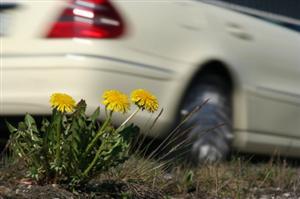
What happens to a plant sealed in a container with gasoline fumes? You place four potted plants under inverted aquariums. Each aquarium also holds a bowl of gasoline. The trapped fumes surround the plant.
Two plants sit at room temperature (24 degrees C). Two go into hot sun (34 degrees C). At each temperature, one plant gets three hours of exposure per day and the other gets six. You observe the plants daily for eight days.
Plants exposed longer and at higher temperatures die faster. Six hours at 34 degrees C is the most damaging combination.
Hypothesis
The hypothesis is that gasoline fumes cause plants to die, and the longer the exposure to the fumes, the quicker the plants will die.
Science Concepts Learned
Toxicology
Toxicology studies how poisons harm living things. In this project, you seal plants inside aquariums filled with gasoline fumes. You test two temperatures and two exposure times over eight days. Plants exposed for six hours at 34 degrees C show the most damage. That result connects directly to toxicology: the dose (exposure time) and conditions (temperature) change how a toxic substance affects a living organism.
Method & Materials
You will set up four potted plants in a well-lit area, and cover them with aquariums. You will then expose the plants to gasoline fumes at different temperatures for different lengths of time.
You will need four potted plants of the same size, four transparent aquariums, four ceramic bowls, one liter of gasoline, a thermometer, and a black marker pen.
Eureka Crate — engineering & invention kits for ages 12+ — monthly projects that build real-world skills. (Affiliate link)
See what’s includedResults
The results showed that the plants exposed to gasoline fumes for longer periods of time, and at higher temperatures, died more quickly.
Why do this project?
This science project is interesting because it shows how gasoline fumes can have a negative effect on plants, and how temperature can affect the rate of death.
Also Consider
To vary the experiment, you could try to ascertain if certain species of plants are more resilient in the presence of gasoline fumes, or study the effect of gasoline vapor on insects.
Full project details
Additional information and source material for this project are available below.Related videos
These videos explain the science behind this project and demonstrate key concepts used in the experiment.
Share this Science Project:
Browse by Grade
Related Science Fair Project Ideas
Mist three types of lichen with simulated acid rain and discover which ones thrive and which ones crumble.
Medium
Mount sticky collection boards across eight city locations and count the airborne particles each one traps over three days.
Medium
Peel a nail-polish impression off pine needles and count their breathing pores to see whether traffic pollution changes how leaves grow.
Medium
Share this Science Project: