Red Cabbage pH Lava Lamp
Hypothesis
Science Concepts Learned
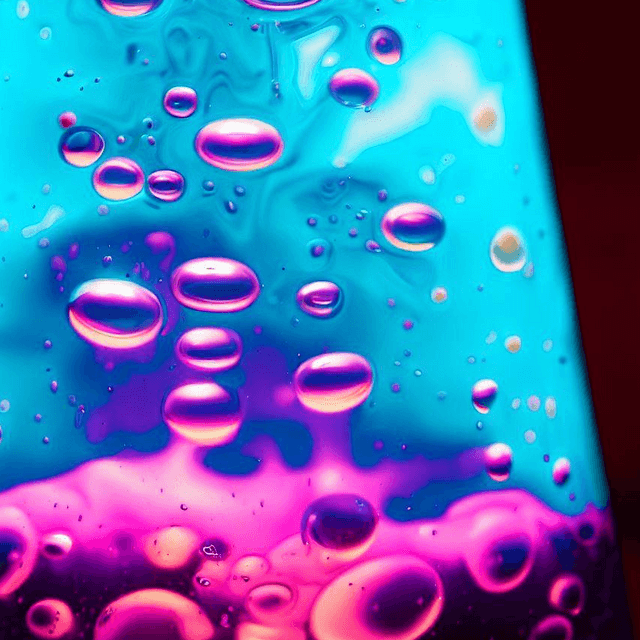
When a fizzing Alka-Seltzer tablet drops into red cabbage juice layered under oil, the tablet reacts with the liquid and releases carbon dioxide gas. The gas forms bubbles that carry colored blobs of cabbage juice up through the oil. Add a small amount of acid or base and the color of those rising blobs changes mid-fizz.
Red cabbage juice is a natural pH indicator — it shifts color when it meets acids or bases. You layer cabbage juice and oil in a tall container, then drop in an Alka-Seltzer tablet. The tablet fizzes and sends colored blobs rising through the oil. Adding a small amount of acid or base changes the color of the blobs mid-reaction, making each pH change visible.
Red cabbage juice is a natural pH indicator that shifts color when it meets acids or bases. When you layer it with oil in a tall container and drop in an Alka-Seltzer tablet, the tablet fizzes and sends colored blobs rising through the oil. Adding a small amount of acid or base mid-reaction changes the color of those blobs as they move — making the chemical change visible in real time.
Red cabbage juice is a natural pH indicator that shifts color when it meets acids or bases. In this project, you layer the juice and oil in a tall container, then drop in an Alka-Seltzer tablet. The tablet fizzes and sends colored blobs rising through the oil. Adding a small amount of acid or base mid-reaction changes the color of the blobs in real time, making the color shift visible as it happens. The result combines density, gas reactions, and pH chemistry in one visual display.
Method & Materials
Tinker Crate — science & engineering build kits for ages 9–12 — real tools, real experiments, delivered monthly. (Affiliate link)
See what’s includedResults
Why do this project?
Also Consider
Full project details
Additional information and source material for this project are available below.Browse by Grade
Related Science Fair Project Ideas