

Detecting Static Electricity
Hard

Have you ever wondered how to detect static electricity? This project will show you how to build an electroscope that can detect static electricity from far away.
Hypothesis
The hypothesis is that a simple circuit can detect the invisible fields of voltage which surround all electrified objects.
Science Concepts Learned
Static Electricity
A buildup of charge on one object can affect a nearby conductor even without touching it. After building a simple circuit with a 9-volt battery, a transistor, and an LED, you charge a pen or comb by rubbing it and wave it close to an antenna wire. The circuit detects the invisible voltage field surrounding the charged object, and the LED responds — showing that static electricity acts at a distance.
Method & Materials
You will build a circuit with a 9-volt battery, a transistor, and an LED. You will then test the circuit by charging up a pen or comb and waving it close to the antenna wire.
You will need a 9-volt battery, a transistor, an LED, a battery connector, alligator clip leads, plastic, fur, foil, comb, tape dispenser, and a plastic cup.
MEL Physics — hands-on physics experiment kits delivered monthly — real experiments, not just reading. (Affiliate link)
See what’s includedResults
This project shows that a simple circuit can detect the invisible fields of voltage which surround all electrified objects. It is possible to detect one volt of static electricity from a distance of five meters or more.
Why do this project?
This science project is so interesting and unique because it shows how to build an electroscope that can detect static electricity from far away.
Also Consider
Experiment variations to consider include testing the circuit on a low-humidity day and building a capacitor out of aluminum foil, styrofoam, and wires.
Full project details
Additional information and source material for this project are available below.Related video
These videos explain the science behind this project and demonstrate key concepts used in the experiment.
Share this Science Project:
Browse by Grade
Related Science Fair Project Ideas

Build a frame from skewers, aluminum foil, and copper wire, then watch it levitate under 40 kilovolts of direct current.
Hard

Power a fan with three battery brands at room temperature, freezing, and extreme cold to see which one lasts longest.
Hard
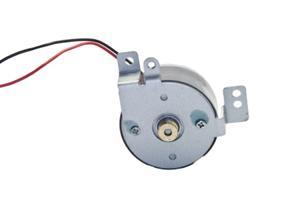
Turn off four different DC motors and time how long each one spins to find out which loses the most energy to friction.
Hard
Share this Science Project: