

Dice Probability and Sample Size
Medium
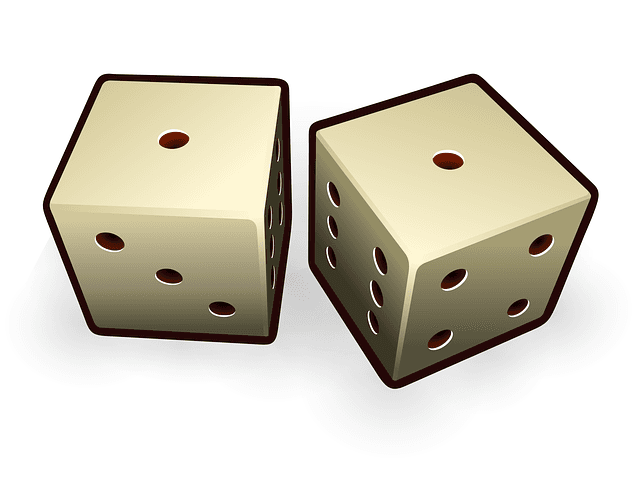
Does each number on a die come up equally often over 100 rolls? Probability says each face has the same one-in-six chance. But real results often look uneven until you gather enough data.
You start by drawing colored dice from a bucket. After each draw, you recalculate the probability of picking a specific color. The odds change slightly every time the total count drops.
Next you roll one die 100 times and record every result. Then you roll two dice 100 times and record those results. Divide the count for each number by 100 to get the actual frequency. Compare the one-die and two-dice results to see how adding a second die changes the distribution.
Hypothesis
The hypothesis is that the probability of each number showing up will differ between the one die and two dice experiments.
Science Concepts Learned
Probability
Each face of a fair die has exactly a one-in-six chance of landing face up — yet when you roll only a few times, the results often look uneven. Small samples allow wide variation, so the numbers can seem off. Roll one die 100 times, though, and the actual frequencies pull closer to that predicted one-in-six split.
Frequency Distribution
Roll one die 100 times, write down every outcome, then divide each count by 100 — that ratio is the frequency for each face. Now do the same with two dice and record those totals. Comparing the one-die and two-dice results reveals how the distribution shifts when you add a second die.
Method & Materials
You will conduct two experiments with dice: rolling one die 100 times and rolling two dice 100 times. Record the number that each die shows.
You will need paper, pencils, dice in three colors (red, white, and green), and a calculator (optional).
MEL Math — hands-on math experiment kits delivered monthly — makes abstract concepts tangible. (Affiliate link)
See what’s includedResults
After conducting the experiments, you'll be able to observe that the probability of each number showing up does differ between the one die and two dice experiments.
Why do this project?
This science project is interesting and unique because it allows students to explore the concept of probability in a hands-on way.
Also Consider
Consider experimenting with different numbers of dice, or rolling the dice a different number of times.
Full project details
Additional information and source material for this project are available below.Related video
These videos explain the science behind this project and demonstrate key concepts used in the experiment.
This video provides a clear explanation of the probability of dice!
Share this Science Project:
Related Science Fair Project Ideas

Drop a pencil in front of 100 to 500 people, record which hand catches it, and see if bigger groups give steadier results.
Medium

Drop 200 marbles through a pegboard and watch them sort themselves into a near-perfect bell curve every single time.
Medium

Chart decades of Los Angeles earthquake data and discover that a rise in small quakes may signal bigger ones ahead.
Medium
Share this Science Project: