

Wall Color and Indoor Temperature
Medium
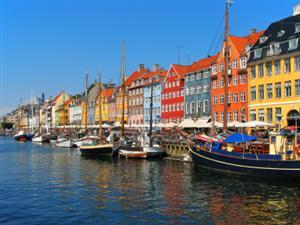
Does the color of a building's walls change the temperature inside? You paint five identical cardboard boxes in different colors: black, white, grey, red, and green.
After the paint dries, you seal each box and insert a thermometer through a small hole in the top. Then you place all five boxes in direct sunlight. Every ten minutes for one hour, you record the temperature inside each box.
The dark black box heats up the most. The white box stays the coolest.
Hypothesis
The hypothesis is that black and darker colored buildings will have warmer indoor temperatures compared to white and lighter colored buildings.
Science Concepts Learned
Heat Absorption
Does the color of a building's walls change the temperature inside? You paint five identical cardboard boxes black, white, grey, red, and green, seal each one, and insert a thermometer through a small hole in the top. All five go into direct sunlight, and you record the temperature inside every ten minutes for one hour. The dark black box heats up the most. The white box stays the coolest.
Radiation
Sunlight carries energy through space as waves. A dark surface soaks up more of that energy than a light one. Black boxes in direct sunlight heat up the most. White boxes stay coolest.
Method & Materials
You will paint five boxes different colors, seal them, and measure the temperature inside each one.
You will need cardboard boxes, paint, paint brushes, thermometers, scotch tape, and Play Doh.
MEL Physics — hands-on physics experiment kits delivered monthly — real experiments, not just reading. (Affiliate link)
See what’s includedResults
The experiment showed that the black box had the highest temperature inside and the white box had the lowest temperature. The color of the walls on our houses can help reduce the temperature in our homes.
Why do this project?
This science project is interesting because it shows how the color of a building can affect the temperature inside.
Also Consider
Variations to consider include using shiny/glossy/reflective paint versus dull/matt colored paint, and using different colors and different materials such as plastic or metal containers.
Full project details
Additional information and source material for this project are available below.Related video
These videos explain the science behind this project and demonstrate key concepts used in the experiment.
Share this Science Project:
Related Science Fair Project Ideas
Drop food coloring into three jars of different temperature water and watch the color spread at wildly different speeds.
Medium
Burn equal pieces of oak, maple, cedar, and pine under water to discover which wood type produces the most heat.
Medium
Compare water in a wide plate versus a narrow glass, sun versus shade, and fan versus still air to see what speeds up evaporation.
Medium
Share this Science Project: