How do you protect a raw egg from a high fall using only household materials? Engineers solve this same kind of problem when they design packaging and safety gear. The goal is to slow the impact or absorb the force.
You build a protective case around a raw egg using everyday materials. Try tape or paper. Straws and fabric work too. Then you drop it from a high point.
The test is simple: crack or no crack. Each design teaches something about how padding and shock absorption work together.
Hypothesis
The hypothesis is that if an egg is placed inside a protective device made from common household materials, then it will survive a drop from a height without cracking.
When something falls and hits the ground, padding can soften the blow. You build a case around a raw egg. Then you drop it from a high point. Materials like bubble wrap or balloons cushion the egg from the hit. The test is simple: crack or no crack.
Dropping a raw egg from a height and watching it survive — or crack — is the engineering design process in its simplest form. You build a protective case using everyday materials: straws, tape, paper cups, rubber bands. Then you drop it. The result tells you exactly what to fix. Maybe the padding was too thin, or the shock absorption was concentrated in the wrong spot. Each design teaches something new about how padding and force absorption work together, which guides the next attempt.
Method & Materials
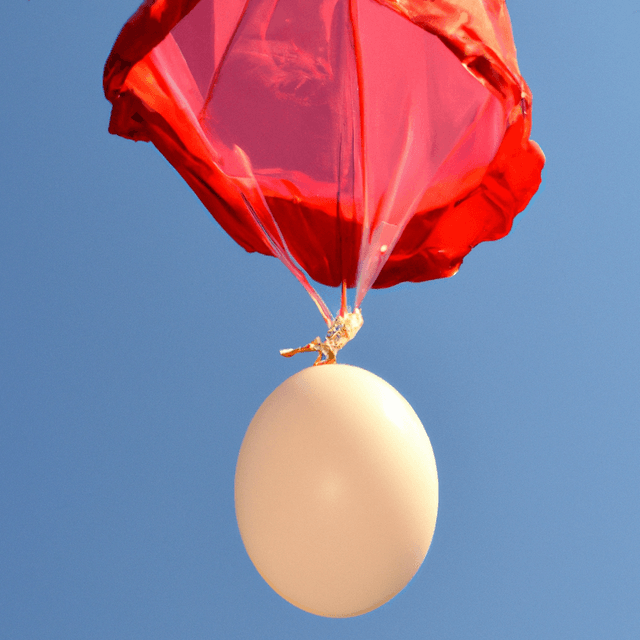
You will use materials such as straws, paper cups, rubber bands, and balloons to create a protective device for your egg. To protect the egg from breaking during a fall, there are three steps you can follow. Firstly, you can slow down the egg when it's falling, such as by using a parachute. Secondly, you can cushion the egg from the impact of the fall, for example, by using bubble wrap, popcorn or balloons. Furthermore, you should ensure that the egg falls on the strongest parts of the shell, which are the arch structures at both ends of the egg. After making the protective device with the raw egg inside, drop it from a high altitude and observe whether the egg remains intact or breaks.
You will need raw eggs, straws, paper cups, rubber bands, balloons, scissors, tape, and any other materials you want to use to create your protective device. In competitions, there may be a set list of materials you can use for the egg drop so that everyone uses the same starting materials.
Tinker Crate — science & engineering build kits for ages 9–12 — real tools, real experiments, delivered monthly. (Affiliate link)
The egg drop designs that incorporated the three factors for a protection device were successful in safeguarding the egg. These factors included slowing down the egg's descent, cushioning the egg from impact, and ensuring the egg fell on its strongest parts. However, as the drop height increased, protecting the egg became more challenging. Despite this, with proper design and construction, it is possible to protect the egg even during a high altitude drop.
Why do this project?
The egg drop project is fun to do as it challenges you to put your creativity and problem-solving skills to the test. Not only will you enjoy designing and testing a protective device for an egg, but you'll also learn invaluable lessons about the practical applications of physics and have hands-on experience with the engineering design process.
Also Consider
1) Test the protective device at different heights to see if it still works. 2) Use different materials to create the protective device and compare the results.
Full project details
Additional information and source material for this project are available below.
These videos explain the science behind this project and demonstrate key concepts used in the experiment.
Watch these 10 egg drop designs being put to the test and learn why some cracked and others survived!
Can straws provide enough protection to save an egg from a drop? Find out in this exciting egg drop experiment using a triangular structure made of straws!
Watch this amazing egg drop experiment where a student uses only paper and tape to create an innovative structure to protect the egg. Will it survive the fall?