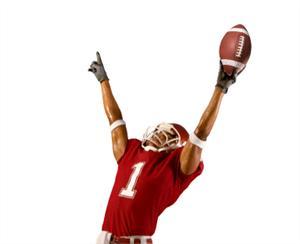
Does playing sports change how you feel about yourself? This project surveys two groups of participants the same age. One group is active in sports. The other is not.
Each person fills out a standard self-esteem survey (a scored questionnaire that measures confidence and self-worth). You compare the average scores between the two groups.
The results show that participants active in sports scored higher on the self-esteem scale than those who were not.
Hypothesis
The hypothesis is that participants who are active in sports have higher self-esteem.
How good or bad you feel about yourself can shift depending on your daily habits. To test this, you survey two groups of participants the same age — one group active in sports, the other not. Each person fills out a standard self-esteem survey, a scored questionnaire that measures confidence and self-worth. When you compare the average scores between the two groups, a clear gap appears: participants active in sports scored higher on the self-esteem scale than those who were not.
A well-designed survey uses a validated, scored questionnaire so every participant answers the same clear questions under the same conditions. In one study, each person fills out a standard self-esteem survey — a scored questionnaire that measures confidence and self-worth — producing a numeric score that allows direct comparison between groups. Using that standardized instrument removes ambiguity from the questions, making the results reliable enough to show that participants active in sports scored higher on the self-esteem scale than those who were not.
Method & Materials
You will need to select 10 boys and 10 girls aged 16 who are either active in sports or not active in sports. You will also need a self-esteem survey form and an examination room.
You will need 5 boys and 5 girls 16 years of age who are active in sports and another 5 boys and 5 girls who are not active in sports. You will also need a self-esteem survey form and an examination room.
Eureka Crate — engineering & invention kits for ages 12+ — monthly projects that build real-world skills. (Affiliate link)
The results of the experiment showed that participants who are active in sports have a higher than average self-esteem than participants who were not involved in sports.
Why do this project?
This science project is interesting because it explores the effects of sports on self-esteem, which is an important factor in a person's overall wellbeing.
Also Consider
Variations of this experiment could include examining whether students who achieve high results for their academic subjects have a greater self-esteem than average students, or investigating whether age matters.
Full project details
Additional information and source material for this project are available below.