

Temperature and Aluminum Corrosion in Salt Solution
Hard
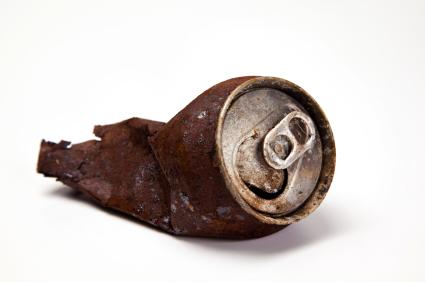
Does heat make aluminum corrode faster in salty water? Aluminum resists rust under normal conditions. But salt and high temperatures can break down that resistance.
You place five aluminum plates in beakers of salt and ferric chloride solution. A thin layer of vegetable oil sits on top to limit contact with air. Each beaker is kept at a different temperature: 25, 40, 55, 70, or 85 degrees Celsius. You hold these temperatures steady for five days using hotplates.
After five days you inspect the plates. The ones stored below 70 degrees show no corrosion. The plates at 70 and 85 degrees both show visible corrosion on their surfaces.
Hypothesis
The hypothesis is that only the aluminum plates that are stored at a sufficiently high temperature will corrode.
Science Concepts Learned
Corrosion
Aluminum normally resists chemical breakdown, but heat changes that. In this experiment, aluminum plates sit in beakers of salt and ferric chloride solution at temperatures ranging from 25 to 85 degrees Celsius, held steady on hotplates for five days. The plates stored below 70 degrees come out clean. At 70 and 85 degrees, visible corrosion appears on the surface — showing that temperature controls how fast the reaction moves forward. When heat combines with salt, aluminum's natural resistance breaks down.
Method & Materials
You will measure and pour 500ml of water into each of the 5 beakers, add 10g of salt and 20g of ferric chloride, and mix the solutions with a spatula. You will then place 1 aluminum plate inside each of the 5 beakers, pour about 3-5mm of vegetable oil over the solution in each beaker, and place 1 thermometer inside each beaker. You will store the first beaker at room temperature (25 °C) for the next 5 days, and place the remaining 4 beakers on hotplates, adjusting the temperature of each to 40 °C, 55 °C, 70 °C and 85 °C.
You will need 5 pieces of aluminum plate, each measuring 5centimeters x 5centimeters, 5 beakers, 2500 milliliters of tap water, 50 grams of salt, 100 grams of ferric chloride, 4 hotplates, 1 measuring cylinder, 1 digital weighing scale, 1 bottle of vegetable oil, 5 thermometers, and 1 spatula.
Eureka Crate — engineering & invention kits for ages 12+ — monthly projects that build real-world skills. (Affiliate link)
See what’s includedResults
After a period of 5 days, it was observed that the aluminum plate will start to corrode at temperatures above 70 °C.
Why do this project?
This science project is interesting because it explores how temperature affects the corrosion of aluminum, which is a common metal used in many everyday items.
Also Consider
Variations of this project could include immersing the aluminum plate in water, salt water and acid at high temperatures, or placing the aluminum plates in solutions of different pH levels.
Full project details
Additional information and source material for this project are available below.Related videos
These videos explain the science behind this project and demonstrate key concepts used in the experiment.
Share this Science Project:
Browse by Grade
Related Science Fair Project Ideas
Run the same vapor deposition process at six furnace temperatures and find the exact threshold where gallium oxide nanowires appear.
Hard
Drop a weight onto three bicycle helmets at different price points and compare pressure gauge readings to see if cost equals protection.
Hard

Wrap a weighted container in three different swimsuit fabrics and race them to the bottom of a pool to see which creates the least drag.
Hard
Share this Science Project: