Search for Science Fair Projects

1000 Science Fair Projects with Complete Instructions

Materials Science Science Fair Project

Temperature and Gallium Oxide Nanowires
Hard
Temperature and Gallium Oxide Nanowires | Science Fair Projects | STEM Projects
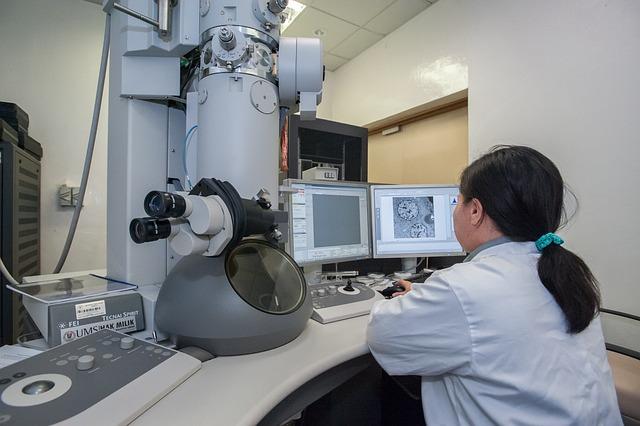
What if a few degrees of difference decided whether an entire structure forms or nothing appears at all? Using chemical vapor deposition (a process that turns a gas into a solid coating), you place a silicon wafer coated with a nickel nitrate catalyst alongside a tiny gallium bead inside a tube furnace. The tube is sealed, pumped to vacuum, and filled with argon gas. Then the furnace ramps up at 17 degrees Celsius per minute, holds at the target temperature for twenty minutes, and cools back down. Repeat the process at six temperatures from 860 to 960 degrees Celsius. Examine each wafer under an electron microscope and discover that gallium oxide nanowires only form above 920 degrees Celsius.

Hypothesis

The hypothesis is that the formation of gallium oxide nanowires will occur at temperatures above 900°C.

Method & Materials

You will coat a silicon wafer with a nickel nitrate solution, place it in an aluminum tube furnace, fill the tube with argon gas, and increase the temperature of the furnace at a rate of 17°C per minute.
You will need 6 gallium beads, an aluminum tube furnace, a cylinder of argon gas, 6 pieces of silicon wafer, a Ni(NO3)2 solution, a beaker of water, a ceramic plate, a vacuum pump, and an electron microscope.

Results

The results showed that gallium oxide nanowires only form at temperatures above 920°C, disproving the hypothesis.

Why do this project?

This science project is interesting because it explores the effect of temperature on the formation of nanowires, which are tiny structures with potential applications in producing tiny components and circuits.

Also Consider

Variations of this experiment include using zinc oxide to produce zinc oxide nanowires.

Full project details

Additional information and source material for this project are available below.

Related videos

These videos explain the science behind this project and demonstrate key concepts used in the experiment.
Share this Science Project:

Related Science Fair Project Ideas

Temperature and Aluminum Corrosion in Salt Solution
Soak aluminum plates in salt solution at five different temperatures and find the point where corrosion begins to appear.
Hard
Bicycle Helmet Brands and Shock Absorption
Drop a weight onto three bicycle helmets at different price points and compare pressure gauge readings to see if cost equals protection.
Hard
Swimsuit Fabric and Water Drag
Wrap a weighted container in three different swimsuit fabrics and race them to the bottom of a pool to see which creates the least drag.
Hard
Share this Science Project: